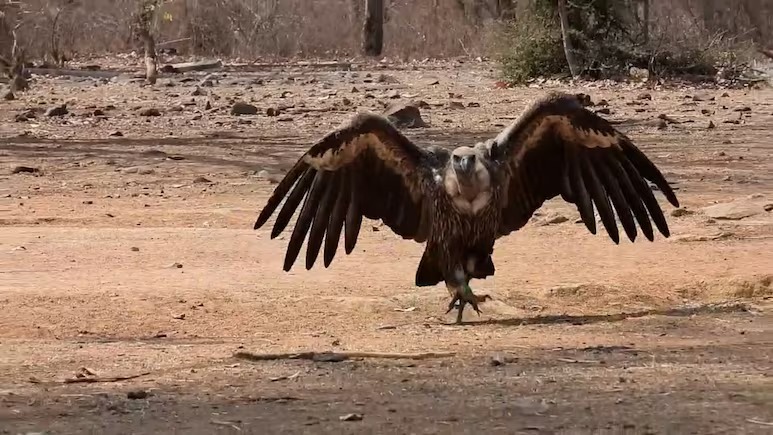
New Delhi: In a significant step toward restoring India’s fast declining vulture population, 15 critically endangered Indian vultures have been released into the wild at the Melghat Tiger Reserve in Maharashtra. The reintroduction forms part of an ongoing conservation effort aimed at reviving vulture populations in their former strongholds.
The birds were released in the Somthana Range of Melghat, located in Amravati district, after undergoing a carefully planned acclimatisation process. They were originally brought from the Vulture Conservation Breeding Centre in Pinjore and translocated to Melghat on April 23 last year. Following their arrival, the vultures were housed in a pre release aviary to help them adapt gradually to local climatic conditions and surroundings.
To ensure close monitoring after their return to the wild, all 15 vultures were fitted with GSM and satellite tracking devices on December 19, 2025. These tags will allow conservation scientists to track the birds’ movement, behaviour and survival, providing valuable data for future recovery programmes.
The release followed a soft release protocol designed to minimise stress and increase survival chances. On January 2, the aviary gates were opened remotely, and food was placed outside the enclosure to encourage the vultures to exit on their own and begin exploring their natural habitat.
The programme, however, was not without challenges. Limited food availability, the absence of an existing vulture population to guide the captive bred birds and the lingering presence of toxic veterinary drugs in the landscape posed major concerns. These obstacles were addressed by setting up dedicated feeding stations and sourcing safe cattle carcasses through partnerships with gaushalas, ensuring the birds had access to uncontaminated food.
Melghat has historically been an important habitat for long billed vultures, and conservationists are hopeful the species can re establish itself in the region. The release was carried out by senior conservation and forest officials with on ground support from field staff.
The initiative reflects growing efforts to reverse decades of population decline caused largely by drug induced poisoning. Conservationists believe sustained monitoring and community involvement will be key to ensuring the vultures’ long term survival in the wild.
Sorry, there was a YouTube error.