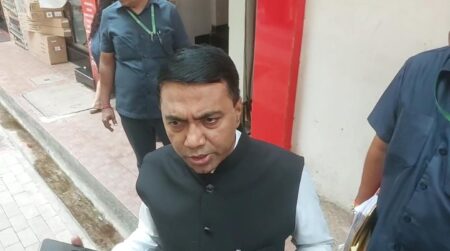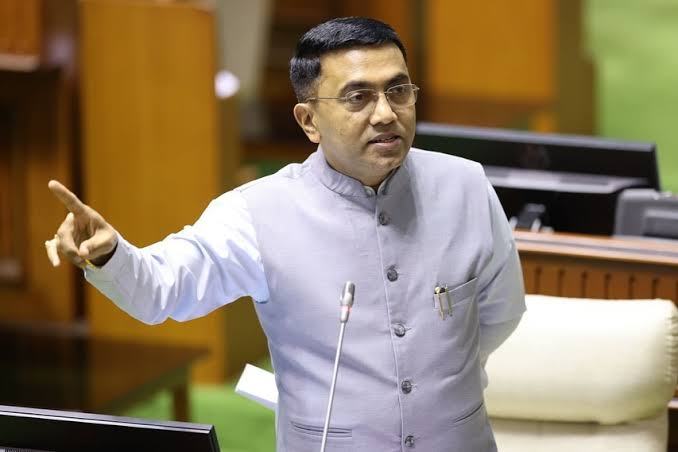
Panaji, Goa: Chief Minister Dr Pramod Sawant presented the Goa Budget 2026–27 in the Assembly on Friday, unveiling a host of initiatives aimed at boosting infrastructure, healthcare, employment, women empowerment, and environmental sustainability across the state. The budget, which integrates social welfare schemes with economic growth strategies, underscores the state government’s focus on inclusive development.
Healthcare Expansion and New Facilities
The government announced the construction of a 100-bed hospital at the Industrial Promotion and Housing Board (IPHB) complex, with completion targeted for December 2026. In addition, a day-care centre at the facility will begin operations as early as April 2026, marking a significant step towards improving medical accessibility for residents.
Another major healthcare initiative is the establishment of an Employees’ State Insurance (ESI) Medical College in South Goa. Half of the seats will be reserved for Goan students, reflecting a commitment to increasing opportunities for local youth in the medical profession. The state will also see the launch of the National Institute of Speech and Hearing, strengthening support for persons with speech and hearing challenges.
Furthermore, several welfare schemes, including enhancements to the Atal Asra Yojana and Griha Adhaar benefits, were announced to support vulnerable families and increase household income.
Women’s Empowerment and Safe Housing
A ₹100 crore allocation has been earmarked for setting up working women’s hostels near major industrial estates, ensuring safe and convenient accommodation for women employed in the state. In addition, the Mhajo Flat Scheme was introduced to provide long-term apartment and flat owners with rightful ownership and deemed conveyance rights, resolving cases where contracts exist only between the builder and the landowner.
Employment, MSMEs, and IT Incentives
The budget also highlights employment generation and support for local industry. A ₹5 lakh incentive will be given to new IT firms that hire at least 50% Goans, encouraging local employment in the technology sector.
The Goa Investment Promotion Board approved 31 projects worth ₹1,117 crore last year, expected to create around 4,950 jobs. Support measures for micro, small, and medium enterprises (MSMEs) were reinforced with soft loans for barge owners involved in mining operations, enabling them to repair barges and restart business activities.
The government also upgraded the Employment Exchange into a Model Career Centre, providing job seekers with digital platforms to access employment opportunities efficiently. Plans for an e-market portal to promote MSMEs were highlighted as part of the state’s broader economic strategy.
Infrastructure Development and Utilities
Water and electricity connections will be provided to all houses built on private plots through the issuance of Emergency House Numbers, ensuring basic services for residents across Goa. The Deen Dayal Infrastructure Development Scheme received a boost of ₹15 crore, earmarked for panchayat ghars, market complexes, community halls, and other civic infrastructure.
In a significant development for South Goa, Rs 500 crore has been allocated for the development and infrastructure of the newly proposed Kushavati district, which will see enhanced facilities and administrative planning.
Technology, Environment, and Safety Measures
The state government announced the use of drones for coastal surveillance to curb illegal fishing and strengthen marine security. Stray cattle management will also be improved with the establishment of eight gaushalas.
Environmental sustainability is a central theme in this budget. The government will establish a State Carbon Nodal Cell under the Environment Department to track and reduce the state’s carbon footprint. A Climate Change Fund will be constituted to support initiatives promoting sustainability. Forest fire monitoring will be strengthened through a partnership with BITS Pilani, and Campal Forest Park is slated for redevelopment to support eco-tourism and conservation.
Solar-powered CCTV cameras will be installed at public places to monitor littering and ensure proper waste segregation, enhancing civic responsibility and urban cleanliness. Additionally, the formation of the Khazan Board under the Agriculture Department will focus on the conservation and protection of Khazan lands.
Social Welfare and Community Support
Several social welfare schemes were reinforced or newly launched. The Divyang Kaushal Yojana aims to provide persons with disabilities (18+) with skill development, employment opportunities, and support for self-reliance. A Divyang Ghar will also be established.
Benefits under the Atal Asra Yojana have been increased from Rs 3 lakh to Rs 5 lakh, and DSSS benefits will now be adjusted for inflation to ensure better financial support to beneficiaries.
The Goa State Cashew Board will be set up with a ₹2 crore allocation to promote cashew cultivation and strengthen the local cashew industry.
Revenue and Tourism
To boost state revenue, the Chief Minister proposed a 200% hike in casino fees, signaling an aggressive approach to leveraging tourism-linked economic opportunities. The government also generated ₹252 crore through the e-auction of 12 mining blocks, with auctions of seven additional blocks and the second phase of dump auctioning underway.
The state’s TCP Department will prioritize sustainable development with environmental protection as a guiding principle, aligning infrastructure and urban planning with ecological concerns.
Key Takeaways
The Goa Budget 2026–27 reflects a comprehensive approach combining economic growth with social welfare, technology, and environmental sustainability. From healthcare and employment to housing and women empowerment, the government has outlined a roadmap for inclusive development that balances infrastructure expansion with community welfare.