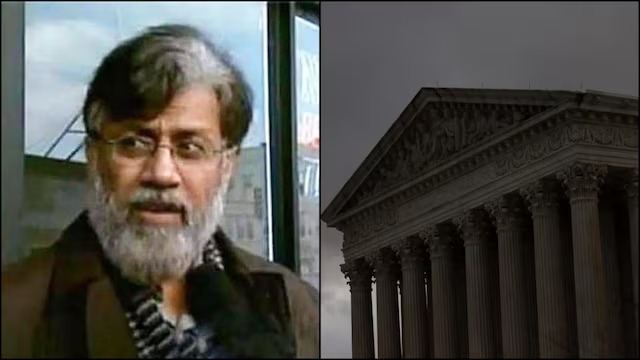
New Delhi: The wheels of justice have turned another notch in the case of Tahawwur Rana, a key figure linked to the devastating 2008 Mumbai terror attacks. The US Supreme Court’s recent rejection of Rana’s plea to halt his extradition to India marks a significant step forward in bringing him to trial for his alleged role in the tragedy that claimed over 170 lives. Rana, a Pakistani-Canadian national, is closely associated with David Coleman Headley, a central conspirator in the attacks. This development follows US President Donald Trump’s confirmation of Rana’s extradition during Indian Prime Minister Narendra Modi’s visit to the White House.
Rana’s extradition was approved by the US government during PM Modi’s visit to Washington, underscoring the collaborative efforts between the two nations in combating terrorism. In a last-ditch attempt, Rana appealed to the US Supreme Court for an emergency stay, citing fears of torture in India due to his Pakistani origin. However, Justice Elena Kagan denied his appeal, moving Rana closer to facing trial in India. Following this denial, Rana’s attorney has appealed directly to US Chief Justice John Roberts in a bid to stall the extradition process.
Rana was previously convicted in the US for supporting Lashkar-e-Taiba (LeT), a banned terrorist organization, and is accused of aiding David Headley in the Mumbai attacks. Once extradited, he will face trial in a special National Investigation Agency (NIA) court in India. This extradition is seen as a significant success for Indian agencies and the government, marking a crucial step in their pursuit of justice for the victims of the 2008 attacks.
Sorry, there was a YouTube error.