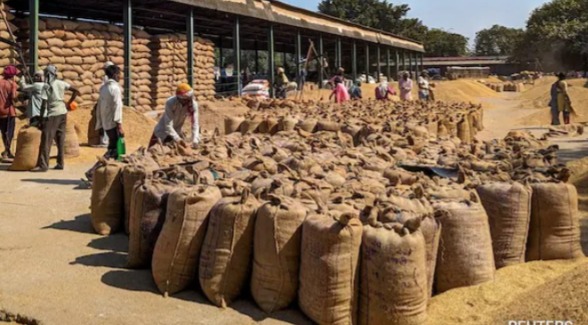
New Delhi: Escalating tensions in West Asia are beginning to affect India’s agricultural exports, with the basmati rice industry facing significant disruption. Trade movement has slowed sharply as the conflict involving the United States, Israel and Iran creates uncertainty over shipping routes, insurance costs and delivery schedules.
Industry estimates indicate that nearly four lakh tonnes of basmati rice consignments are currently stranded either at international ports or while in transit. The disruption has created serious challenges for exporters, millers and traders who rely heavily on markets across the Middle East.
India remains the world’s largest exporter of basmati rice, and countries in West Asia account for a large share of the trade. Iran, Saudi Arabia, Iraq, the United Arab Emirates and Yemen together represent nearly half of India’s basmati export market. With shipping routes now facing disruptions and additional risk charges, the flow of consignments to these destinations has slowed considerably.
The impact is already being felt in domestic markets, where basmati prices have declined sharply. Traders in major agricultural markets report that prices of several varieties have dropped by as much as Rs 1,000 per quintal due to the sudden slowdown in exports. Popular varieties including Basmati 1509, Basmati 1121, Sugandha and Sharbati are among those affected by the disruptions.
Export hubs in states such as Madhya Pradesh are experiencing a noticeable decline in orders. Districts known for large scale basmati exports have seen a sharp reduction in shipments as exporters face higher costs and logistical complications. War risk surcharges and changes in shipping routes have significantly increased operational expenses.
Exporters say the additional charges have pushed export prices up by around Rs 8 to Rs 10 per kilogram. Shipping companies have also redirected some consignments to alternative ports instead of their original destinations, causing delays and increasing transportation costs.
Rising freight costs have added further pressure. Container prices that previously stood at around 1,800 dollars have surged to nearly 3,800 dollars, increasing financial strain on exporters. Payments have also been delayed as shipments remain stuck and some buyers have yet to collect their consignments.
Despite the disruption, some industry leaders believe the slowdown may be temporary. They say shipments already in transit could still reach their destinations and demand may recover if tensions in the region ease and trade routes stabilise.
Sorry, there was a YouTube error.