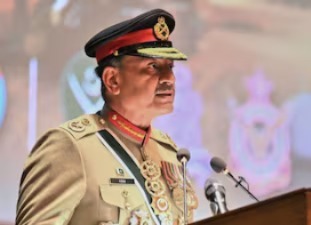
New Delhi: Pakistan’s Army Chief, Field Marshal Asim Munir, has stirred controversy with claims that Pakistan relied on “90 per cent indigenous technology” during recent hostilities with India following Operation Sindoor, and that its forces successfully destroyed multiple advanced Indian military assets. The remarks were made while Munir was promoting an arms deal involving the sale of JF-17 fighter jets to Libya’s Libyan National Army.
In a widely circulated video, Munir asserted that Pakistan’s military showcased domestically developed technology during the conflict and used it to neutralise Indian Rafale, Su-30, MiG-29, Mirage 2000 aircraft and even the S-400 air defence system. These statements, however, are not supported by verifiable evidence and have been challenged by multiple independent assessments.
There has been no confirmed proof of any Indian Rafale or other frontline fighter jets being shot down, nor any damage to the S-400 system. Satellite imagery, debris analysis, and open source intelligence have consistently failed to substantiate Pakistan’s claims. No neutral defence analyst or international observer has verified the losses cited by Munir.
Indian authorities have also flagged repeated attempts to circulate misleading content related to the conflict, including misidentified images and fabricated narratives aimed at exaggerating Pakistan’s battlefield success. Claims regarding destroyed Indian aircraft have been publicly debunked, with experts clarifying that visuals shared online did not correspond to Indian platforms.
At the same time, evidence from recovered debris and technical analysis has pointed to extensive use of Chinese origin systems by Pakistan during the confrontation. Missiles, drones, radar components and avionics linked to Chinese manufacturers were identified, directly contradicting the claim of predominantly indigenous technology.
The JF-17 fighter jet itself is a joint Pakistan China project, with core systems such as radar, avionics and weapons sourced largely from China. Defence analysts note that Pakistan’s role is primarily focused on assembly and incremental upgrades rather than full scale indigenous development.
Indian military officials have previously stated that a large majority of Pakistan’s defence hardware is of Chinese origin, with Beijing using Pakistan as a testing ground for its weapons systems. Against this backdrop, analysts argue that branding foreign technology as domestic innovation appears aimed at political messaging and boosting arms exports rather than reflecting operational reality.
Sorry, there was a YouTube error.