


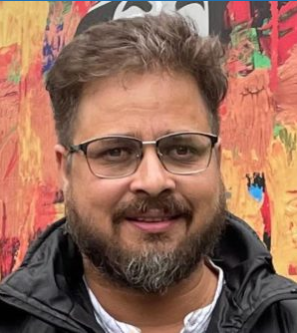
“It is also worth reflecting on the role of society at large. Too often, we allow small disputes to escalate because bystanders look away or because communities hesitate to condemn their own when they are in the wrong. Silence, in these moments, becomes complicity. The attack on Rama Kankonkar should serve as a reminder that peace is not maintained by police patrols alone, but by citizens standing firmly against lawlessness, no matter who the victim is.”
Goa has always prided itself on being a peaceful state. Even when political differences, social tensions, or personal disputes arise, the people of this state have usually chosen dialogue over violence. That is why the brutal assault on Rama Kankonkar has shocked and disturbed not just one community, but every Goan who values harmony and civility.
No reason can ever justify an act so inhuman. Disagreements, however deep they may be, must never spill into bloodshed. The moment citizens take the law into their own hands, society begins to unravel. Law and order are not just about the presence of police or courts; it is also about a collective understanding that disputes are to be resolved through legal and democratic channels. The attackers of Rama Kankonkar broke this social compact in the most violent way, and for that, they deserve the strictest possible punishment under the law.
Goa’s Chief Minister and the Director General of Police acted swiftly, and within two days, seven accused were arrested. The quick response is reassuring at a time when people’s faith in institutions can easily be shaken by such incidents. But arrests, while important, are only the first step. Justice must be delivered through a transparent and fair trial, and delivered in time. People need to see that the law is not just a shield but also a sword against those who attempt to destroy peace.
The larger worry is not just this one incident, but what it represents. Violence of this nature rarely happens in isolation. It reflects an undercurrent of aggression, perhaps emboldened by a belief that muscle power or mob action can settle scores. Goa cannot afford to let such a mindset take root. Once violence becomes a language, it spreads quickly, and soon the state that has long been known for its tranquility could find itself trapped in cycles of fear and retaliation.
It is also worth reflecting on the role of society at large. Too often, we allow small disputes to escalate because bystanders look away or because communities hesitate to condemn their own when they are in the wrong. Silence, in these moments, becomes complicity. The attack on Rama Kankonkar should serve as a reminder that peace is not maintained by police patrols alone, but by citizens standing firmly against lawlessness, no matter who the victim is.
The government, too, must go beyond arrests. A visible increase in community policing, public awareness campaigns, and engagement with local leaders is essential. Goa’s reputation as a safe and welcoming place is not just important for tourism or the economy. It is essential for the dignity of its own people. When residents feel unsafe, when fear starts dictating daily life, a society loses more than its calm — it loses its character.
There is also a lesson here for political and social leaders. At times, rhetoric can fuel division and anger. Leaders across the spectrum must ensure that their words encourage restraint, dialogue, and tolerance. They must also resist the temptation to turn such crimes into platforms for political point-scoring. The focus must remain firmly on justice and on preventing any recurrence.
At the heart of this editorial is a simple truth: violence is not Goan. It is alien to our culture and alien to our values. Goa is at its best when communities live together, celebrate together, and resolve differences through discussion. That is the Goa we know, and that is the Goa we must preserve.
The attack on Rama Kankonkar is a grim reminder of what happens when this shared understanding is broken. The state has responded quickly, but the responsibility does not end with the government. Every citizen must recognise that peace is fragile, and it takes constant effort to protect it. The attackers have already betrayed that responsibility. The rest of us must ensure their betrayal does not define us.
Justice must be done, and beyond justice, Goa must send a clear message: violence will never be tolerated here. Not today, not ever.
