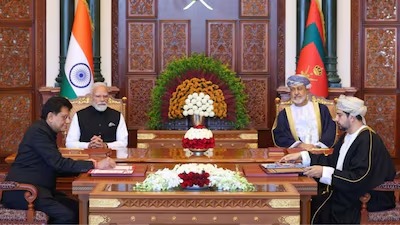
New Delhi: India and Oman have entered a new phase of economic cooperation with the signing of a Comprehensive Economic Partnership Agreement, a landmark pact designed to significantly deepen bilateral trade and investment ties. Prime Minister Narendra Modi described the agreement as a historic step that will energise relations between the two countries for decades and open fresh opportunities across multiple sectors.
The agreement reflects a shared commitment to expand cooperation in goods, services and investment while strengthening long term economic engagement. It is expected to give new momentum to trade flows, encourage cross border investments and create meaningful opportunities for businesses and young professionals in both nations.
Oman is regarded as a key strategic partner for India in the Gulf region and serves as an important gateway to markets in the Middle East and Africa. The relationship is further strengthened by a strong Indian community in Oman, numbering around seven lakh people, including families with commercial links spanning more than two centuries. Indian enterprises also have a notable presence, with over 6,000 businesses operating across a wide range of sectors. Bilateral trade between the two countries currently exceeds 10 billion dollars, supported by substantial annual remittances.
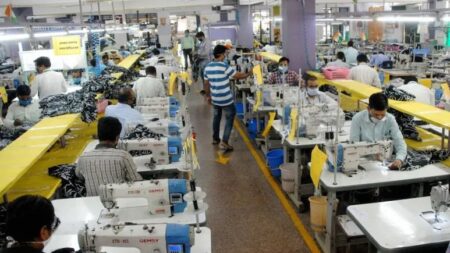
Under the CEPA, Oman has granted zero duty access on more than 98 percent of its tariff lines, covering over 99 percent of India’s exports. Major sectors such as textiles, gems and jewellery, leather, engineering goods, pharmaceuticals, medical devices and automobiles are set to benefit from full tariff elimination, most of it effective immediately.
India will, in turn, liberalise tariffs on nearly 78 percent of its tariff lines, accounting for about 95 percent of imports from Oman by value. Certain sensitive products, especially in agriculture and labour intensive segments, have been excluded to safeguard domestic interests.
Services form a central pillar of the agreement. Oman has offered extensive commitments in areas including information technology, professional services, education, healthcare, research and audio visual services. Provisions to enhance mobility for Indian professionals, such as higher quotas and longer stay periods, have also been included.
A significant highlight is Oman’s commitment to traditional medicine, opening new avenues for India’s AYUSH and wellness sectors. The pact also permits full foreign direct investment by Indian companies in several services sectors in Oman.
The agreement is expected to strengthen supply chains, generate employment and firmly anchor the India–Oman economic partnership in the years ahead.
Sorry, there was a YouTube error.