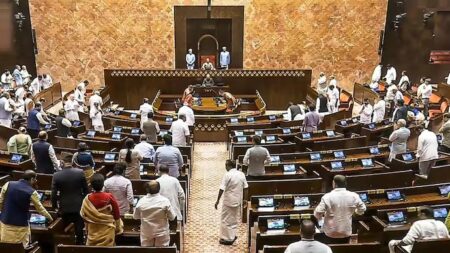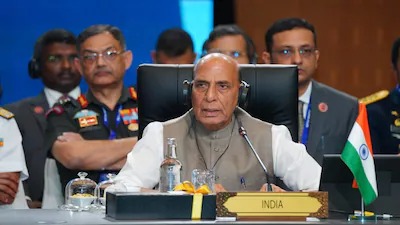
New Delhi: The central government held an all party meeting in New Delhi to brief political leaders on India’s approach to the rapidly evolving situation in West Asia and its implications for the country’s economy, energy supplies, and diplomatic relations. The meeting, chaired by Defence Minister Rajnath Singh, brought together senior ministers and leaders from across the political spectrum to discuss India’s multi layered strategy to manage the crisis.
Among those present were Home Minister Amit Shah, External Affairs Minister S. Jaishankar, Parliamentary Affairs Minister Kiren Rijiju, and Petroleum Minister Hardeep Singh Puri. The government used the session to reassure parties that India has prepared a comprehensive plan to safeguard energy supplies, manage diplomatic relations, and maintain stable trade flows.
During the discussions, opposition leaders raised questions about India’s diplomatic stance amid the tensions in West Asia, including reports that Pakistan had offered to mediate between the United States and Iran. The government responded that such mediation proposals are not new and referred to earlier arrangements dating back decades. Officials also reiterated that India does not act as a broker in international disputes.
The meeting also addressed concerns about India’s response to recent developments in Iran and the impact of international sanctions on oil imports. Ministers explained that the existing sanctions framework originated years earlier and remains part of the broader global policy environment.
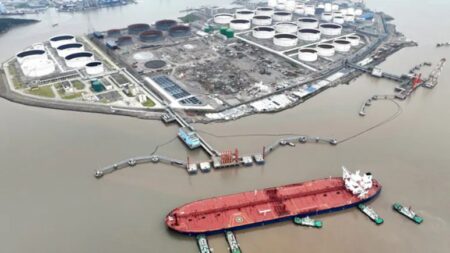
Energy security formed a central part of the briefing. The government informed parties that nearly 70 percent of India’s crude oil imports are now routed through alternative channels, reducing dependence on the Strait of Hormuz, a key but vulnerable maritime passage in the region. Officials added that India has expanded sourcing arrangements with several countries while also using facilities such as Saudi Arabia’s Yanbu port on the Red Sea to secure supply lines.
The diversification strategy also covers liquefied natural gas and liquefied petroleum gas imports from 14 countries including the United States, Australia, and Oman. The government assured leaders that there is currently no shortage of petrol, diesel, kerosene, aviation fuel, or household cooking gas across the country.
In addition to energy, the government highlighted measures taken to secure fertiliser supplies for the upcoming Kharif season. Stocks of urea, DAP, and NPK fertilisers are reported to be higher than last year due to expanded procurement from nearly 20 countries including Egypt, Oman, and Saudi Arabia.
Officials also pointed to India’s role in promoting maritime safety. Following discussions at the International Maritime Organization and a resolution at the United Nations Security Council earlier in March, India advocated for safe navigation of global shipping routes. The intervention helped redirect several LNG vessels through the Strait of Hormuz without disruption.
Concluding the meeting, the government urged all political parties to maintain unity and present a coordinated national message during the ongoing global uncertainty. Leaders were asked to avoid statements that could trigger public concern and instead work collectively to reassure citizens about the country’s preparedness.