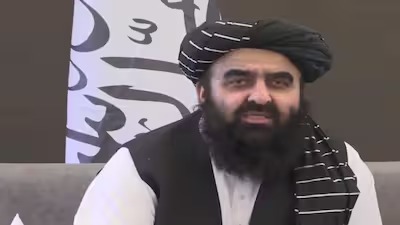
New Delhi: Afghanistan’s acting foreign minister Amir Khan Muttaqi has accused Pakistan of putting forward demands that were neither workable nor grounded in reality, leading to the failure of the recent negotiations held between the two sides in Istanbul. Addressing reporters in Kabul, he said the talks stalled because Islamabad insisted on commitments that the Taliban administration could not meet.
According to Muttaqi, Pakistan wanted Kabul to guarantee internal security within Pakistani territory and take direct action against the Tehreek-i-Taliban Pakistan. He said such expectations were impractical, arguing that Afghanistan had no authority over armed groups operating inside Pakistan. He added that Islamabad had even urged the Taliban to move TTP members into Afghanistan, which he said was impossible and beyond Afghanistan’s responsibility.
Muttaqi stated that the Afghan delegation concluded its visit to Istanbul only after it became clear that the discussions would not progress, countering suggestions from Pakistan that the Taliban withdrew prematurely. He said the breakdown was a result of expectations that could not be fulfilled.
Pakistan has long accused the Afghan Taliban of offering sanctuary to TTP militants involved in attacks within Pakistan. Muttaqi rejected this narrative, saying TTP’s roots lie inside Pakistan and that the group has been active there for decades. He added that Pakistan’s internal security challenges stem from its own policies and that the blame should not be shifted onto Afghanistan.
He also criticised what he described as violations of Afghanistan’s sovereignty, alleging that Pakistan allowed cross-border airstrikes and drone activity. He said Kabul had asked Islamabad to halt such actions and prevent infiltration attempts by extremist groups across the border.
Muttaqi said Afghanistan hopes for stable relations with its neighbours, but cooperation must be based on respect for territorial integrity and non-interference. While the Taliban deny hosting TTP fighters, a recent United Nations monitoring report estimated that thousands of militants linked to the Pakistan-origin group continue to operate across various Afghan provinces.