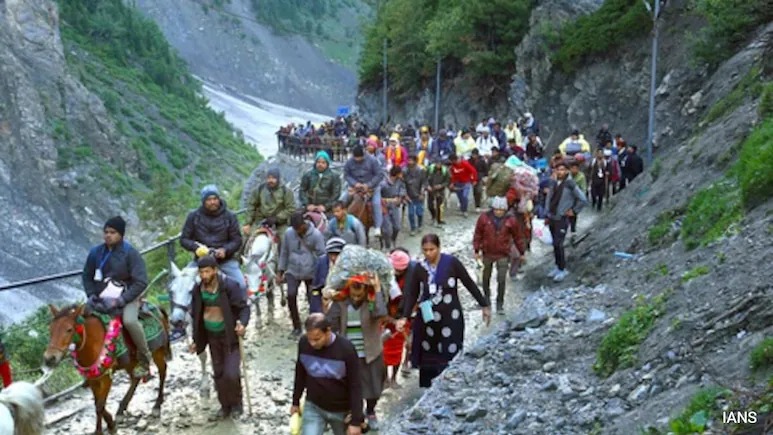
New Delhi: The ongoing Amarnath Yatra 2025 has seen a massive influx of pilgrims, with over 1 lakh devotees visiting the holy cave shrine in just the first seven days. However, what’s drawing attention is that most pilgrims are opting to travel independently, outside the formally designated convoys provided by the government for security.
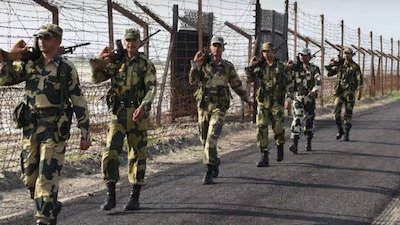
This year’s pilgrimage is marked by unprecedented security deployment, with around 600 additional paramilitary companies stationed in Jammu and Kashmir. This comes in response to heightened security concerns following the terror attack in Pahalgam on April 22.
Despite these measures, only 7,000 pilgrims per day on average are using the official convoys from Jammu to the base camps in Baltal and Pahalgam—a journey that involves heavy security escort. The majority of yatris, however, prefer to make their way independently, citing greater flexibility and fewer restrictions.
“It’s more comfortable this way,” said Amit, a pilgrim from Delhi. “Travelling in convoys means following tight rules. We feel safe anyway, and going on our own allows us to enjoy the scenic beauty of Kashmir too.”
Amit and his group of five friends are now stationed in Pahalgam, preparing to begin the 30-kilometre trek to the cave shrine from Chandanwari. On Tuesday alone, a staggering 26,000 yatris reached the shrine, a number that starkly contrasts with the limited convoy numbers, indicating a clear preference among pilgrims for travelling independently.
This growing trend comes despite repeated appeals from J&K Lieutenant Governor Manoj Sinha, who also serves as chairman of the Shri Amarnath Shrine Board (SASB). Sinha had urged yatris to travel only via official convoys for their safety.
Still, pilgrims on the ground say they feel secure.
“I’ve been here in Pahalgam for the past three days. There’s no fear at all,” said Manju Bhai, a devotee from Gujarat.
The Amarnath Yatra, deeply rooted in Kashmir’s syncretic culture, has historically enjoyed local support. In fact, the cave shrine—perched at an altitude of 12,756 feet in the Himalayas—was reportedly discovered by a Muslim shepherd, Buta Malik, in 1850. Till 2005, the Malik family was actively involved in managing the shrine before the SASB took full control.
However, in recent years, tight security protocols have created a disconnect between locals and pilgrims. Civilians, unless involved directly in the Yatra—like pony operators and palanquin bearers—have limited interaction with the yatris due to restricted movement zones and security enclosures.
Convoy movements on the Jammu–Srinagar highway and other roads leading to the base camps bring life to a standstill. Civilian vehicles and pedestrian movement are halted for the convoy’s safe passage, affecting the daily lives of locals along the route.
Authorities acknowledged that the April 22 terror attack had led to a temporary drop in pilgrim registrations. However, numbers have steadily picked up since the Yatra began. As per official figures, over 4 lakh pilgrims have already registered for the 2025 edition.
With the surge continuing and confidence among pilgrims visibly intact, this year’s Amarnath Yatra is shaping up to be one of the largest in recent memory, both in terms of participation and logistical coordination.
Sorry, there was a YouTube error.