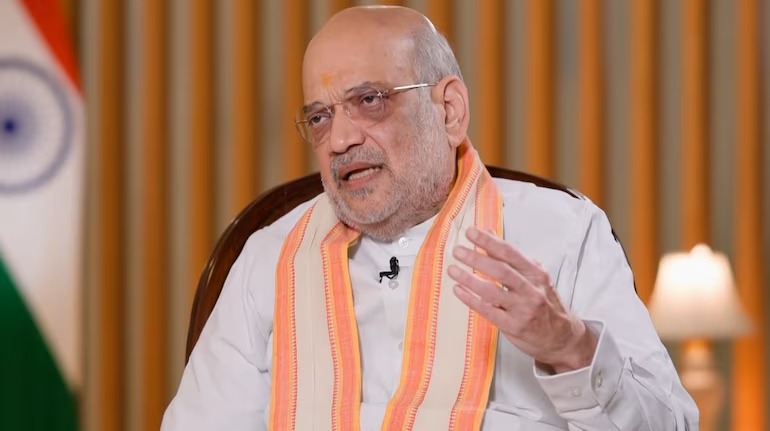
New Delhi: Union Home Minister Amit Shah on Thursday announced a major breakthrough in India’s fight against Left-Wing Extremism, revealing that 258 Maoists have surrendered in Chhattisgarh and Maharashtra over the last two days. Calling it a landmark moment, he said 170 Maoists laid down arms in Chhattisgarh on Thursday, following 27 on Wednesday and another 61 in Maharashtra.
Shah said the government’s message to the extremists is clear—those who surrender will be welcomed, but those who continue violence will face decisive action from security forces. He declared that two of Chhattisgarh’s most affected regions, Abujhmarh and North Bastar, have now been freed from Maoist control. “Only traces of Naxalism remain in South Bastar, which will soon be eliminated,” he said.
The Home Minister added that since January 2024, following the formation of the BJP government in Chhattisgarh, over 2,100 Naxalites have surrendered, 1,785 have been arrested, and 477 eliminated. He reiterated the government’s goal to completely eradicate Naxalism from the state by March 31, 2026. “These numbers mirror our fierce resolve to decimate the movement,” he said, applauding those who have chosen to rejoin mainstream society.
Later in the day, addressing a conference on “Extradition of Fugitives – Challenges and Strategies” organised by the CBI, Shah proposed a series of reforms to strengthen India’s extradition framework. He suggested that every state establish a special prison meeting international standards to counter fugitive claims in foreign courts about poor jail conditions in India. “If fugitives use this excuse, why give them that chance?” he said, adding that each state capital should have a detention facility aligned with global human rights norms.
To curb the free movement of offenders, Shah also recommended immediate cancellation of passports for individuals against whom Interpol Red Notices have been issued. He emphasised creating a national database of fugitives, detailing their crimes, networks, and current locations, and urged states to form specialised extradition cells.
Highlighting India’s ongoing efforts to bring back offenders wanted for terrorism, financial crimes, and narcotics smuggling, Shah said coordination among the CBI, Intelligence Bureau, and state police forces is essential. He also encouraged greater use of the “trial in absentia” provision under the new Bharatiya Nagarik Suraksha Sanhita (BNSS), allowing fugitives to be tried in their absence, further tightening the country’s legal framework against economic offenders and terror fugitives.