New Delhi: In a scathing rebuttal to Pakistan’s latest rhetoric, Assam Chief Minister Himanta Biswa Sarma strongly rejected claims that China could block the Brahmaputra River’s flow to India. The remarks came after Rana Ihsaan Afzal, a close aide to Pakistan Prime Minister Shehbaz Sharif, warned that India’s decision to suspend the Indus Waters Treaty (IWT) might set a precedent for China to choke India’s access to Brahmaputra waters.
Speaking on Geo News, Afzal had suggested, “If India stops the flow to Pakistan, then China can also do the same thing. If that happens, the world will be at war.”
Reacting to this, CM Sarma took to X (formerly Twitter) to expose what he called Pakistan’s “manufactured threat.” He emphasized that the Brahmaputra is largely sustained within Indian territory and that Pakistan’s fears were not rooted in facts.
“After India decisively moved away from the outdated Indus Waters Treaty, Pakistan is now spinning another manufactured threat: ‘What if China stops the Brahmaputra’s water to India?’” Sarma posted.
China’s Limited Role in Brahmaputra’s Flow
Sarma pointed out that China contributes only about 30–35% of the Brahmaputra’s total volume, mostly through glacial melt and limited rainfall in Tibet. The majority—nearly 65–70%—is generated in India through heavy monsoon rains and an extensive network of tributaries.
“Torrential rainfall across Arunachal Pradesh, Assam, Nagaland, and Meghalaya, along with major tributaries like the Subansiri, Lohit, Kameng, and Manas, feed the Brahmaputra after it enters India,” he explained.
He also mentioned other contributors such as the Khasi, Garo, and Jaintia Hills that channel water through rivers like the Krishnai, Digaru, and Kulsi.
River Gains Strength Inside India
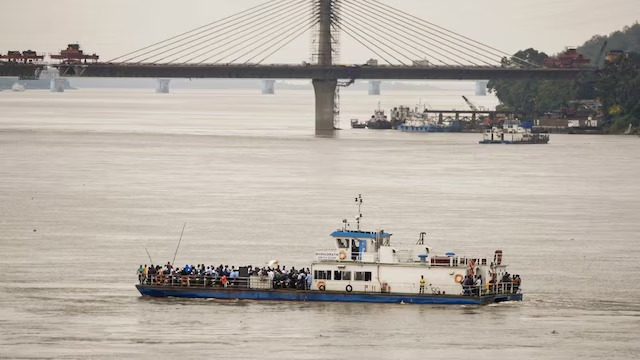
Dismissing the fear-mongering, Sarma stressed that the Brahmaputra actually strengthens as it flows into India. At the Indo-China border near Tuting, the river’s flow measures around 2,000–3,000 cubic meters per second (m³/s), but this swells dramatically to 15,000–20,000 m³/s in the Assam plains during monsoon.
He further noted that any hypothetical reduction in water flow from China—though highly unlikely—could even help India reduce the devastation caused by annual floods in Assam.
“Even if China were to reduce water flow, it may actually help India mitigate the annual floods in Assam, which displace lakhs and destroy livelihoods every year,” Sarma remarked.
Firm Message to Pakistan
Hitting back at Pakistan’s warnings of war and retaliation, Sarma said India is not dependent on China for the Brahmaputra’s vitality and dismissed the notion that India could be intimidated through such narratives.
“Brahmaputra is not controlled by a single source, but is powered by our geography, our monsoon, and our civilisational resilience,” he said.
The Chief Minister also criticized Pakistan’s long-standing exploitation of the Indus Waters Treaty, calling India’s decision to suspend it a rightful assertion of its sovereign rights.
In conclusion, Sarma’s fiery rebuttal not only dismissed Pakistan’s alarmist rhetoric but also reaffirmed India’s hydrological strength and strategic confidence in managing its own rivers.
Sorry, there was a YouTube error.