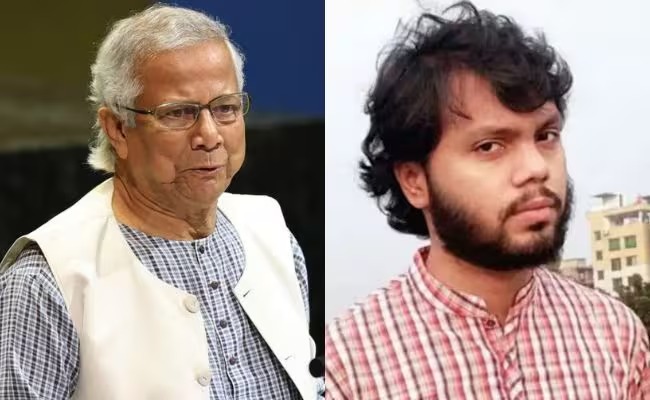
Dhaka: Bangladesh’s political turmoil has intensified following sharp allegations against the interim government led by Nobel laureate Muhammad Yunus, with the brother of slain student activist Sharif Osman Hadi accusing the administration of orchestrating his killing to derail the country’s upcoming national elections.
Sharif Osman Hadi, a prominent student leader and convenor of the cultural-political platform Inquilab Moncho, was shot in Dhaka on December 12. Critically injured, he was flown to Singapore for advanced treatment but succumbed to his injuries on December 18. His death has triggered widespread anger, protests and sporadic violence across the capital, further destabilising an already fragile political environment.
Addressing a gathering of protesters at Shahbagh, Osman Hadi’s brother, Sharif Omar Hadi, directly blamed the Yunus-led interim administration for the killing. He alleged that the murder was part of a deliberate attempt to create chaos and prevent the conduct of free and fair elections scheduled for February.
“You had Osman Hadi killed and are now using this issue to derail the polls,” Omar said, demanding immediate arrests and a time-bound trial of those responsible. He warned that continued delays and lack of transparency in the investigation would deepen public mistrust and push the country closer to prolonged instability.
Omar further claimed that his brother was targeted because of his refusal to align with powerful interests, stating that Osman Hadi “did not bow to any agency or foreign masters.” The remarks reflect growing suspicion among sections of protesters that the killing was politically motivated rather than a random act of violence.
The death has sparked violent demonstrations in parts of Dhaka, with protesters attacking offices of media houses, cultural organisations and other institutions seen as aligned with the establishment. Security forces have been deployed in large numbers to control the situation, while curfews and restrictions have been imposed in sensitive areas.
The interim government has denied any involvement in the killing and has promised swift action against those responsible. Officials have said investigations are underway and assured that law and order will be maintained to ensure the elections proceed as scheduled. However, critics argue that the administration’s response has been slow and inadequate, fuelling speculation and anger on the streets.
Political leaders aligned with the previous government have also seized upon the incident to attack the Yunus administration, accusing it of presiding over a breakdown of law and order and failing to protect citizens. They have warned that continued unrest could undermine Bangladesh’s democratic process and damage its international standing.
As tensions remain high, the killing of Osman Hadi has emerged as a flashpoint in Bangladesh’s ongoing crisis, intertwining demands for justice with fears over the future of the electoral process. With protests showing no signs of abating, the interim government faces mounting pressure to restore confidence, deliver accountability and steer the country away from further instability.