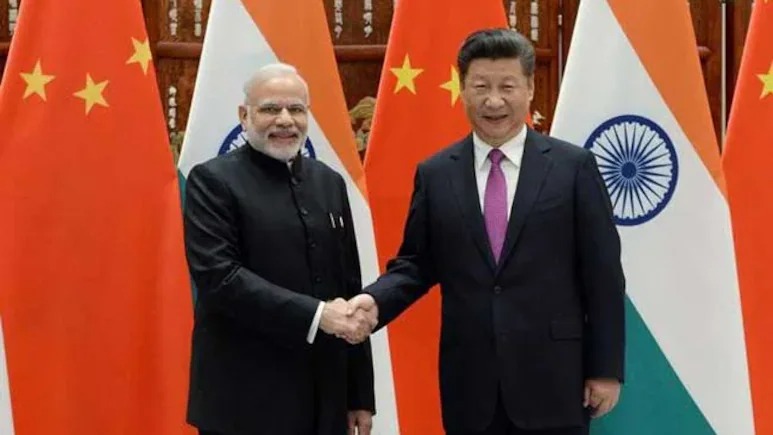
New Delhi: In the face of escalating trade tensions between the United States and China, marked by the U.S. imposing a 104% tariff on Chinese imports, China has sought to strengthen its relationship with India. Chinese Foreign Minister Wang Yi emphasized the importance of cooperation between the two nations, suggesting that their collaboration could reshape global governance and bolster the influence of the Global South. He metaphorically described this partnership as a “dance of the dragon and elephant,” highlighting mutual support over rivalry as the optimal path forward.
This appeal for unity comes amid a backdrop of historical tensions, notably the 2020 Galwan Valley clashes, which have strained bilateral relations. However, recent developments indicate a thawing of these tensions. In April 2025, Chinese President Xi Jinping met with Indian President Droupadi Murmu in Beijing, where they agreed on the necessity for enhanced cooperation. President Xi remarked that improving China-India relations serves the common interests of both nations and their peoples.
Economically, despite political strains, trade between China and India has flourished. In 2021, bilateral trade reached a record high of $125.66 billion, a 43.3% increase from the previous year. This surge is attributed to the complementary nature of the two countries’ industrial sectors, with India relying heavily on Chinese chemicals and materials for its pharmaceutical industry.
China’s recent overtures to India are also seen as a strategic move to counterbalance the effects of U.S. tariffs. The Chinese Embassy in India called for joint efforts to oppose unilateral trade practices and safeguard the multilateral trading system. This stance underscores the shared interests of China and India in promoting free trade and resisting protectionist measures.
In summary, the U.S.-China trade conflict has inadvertently propelled China and India toward closer economic and strategic ties. While historical issues persist, both nations are exploring avenues for collaboration to mitigate external trade pressures and enhance bilateral relations, signaling a potential shift in regional dynamics.
Sorry, there was a YouTube error.