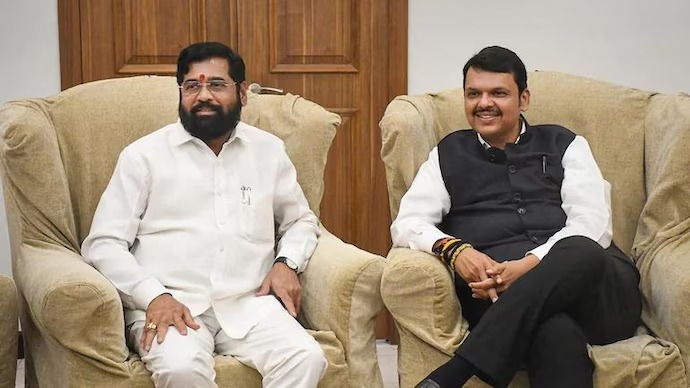
Mumbai: The Bharatiya Janata Party and the Eknath Shinde-led Shiv Sena have nearly completed their seat-sharing arrangement for the upcoming Brihanmumbai Municipal Corporation elections, agreeing on allocations for approximately 200 of the 227 wards as the city prepares for voting scheduled in mid-January. The two parties, key partners in the Mahayuti alliance in Maharashtra, conducted extensive consultations and late-night discussions to finalise the seat matrix and candidate lists well ahead of the nomination deadline, as political maneuvering intensifies ahead of the high-stakes civic polls.
Alliance strategists said the talks focused on balancing electoral strength and organisational presence across Mumbai’s diverse wards. Leaders from both parties sought to maximise winnable seats while maintaining coalition unity. Meetings reportedly continued into the night at senior leaders’ residences and party offices, with both camps working to resolve differences and agree on a framework reflecting their respective strengths across the metropolis.
While the broad contours of the seat-sharing agreement cover around 200 wards, discussions are ongoing to finalise the remaining seats and specific candidates. Leaders emphasised that the process is designed to align with alliance objectives while taking local voter dynamics into account. In addition to the BMC, Mahayuti partners are holding meetings to plan strategy for municipal elections in Thane, Kalyan-Dombivli, Navi Mumbai, Panvel, Chhatrapati Sambhaji Nagar, and Mira-Bhayandar, signalling a coordinated effort across multiple urban local bodies.
Meanwhile, opposition parties are recalibrating their plans in response to the BJP-Shiv Sena alignment. Congress leaders in Mumbai have scheduled consultations with Prakash Ambedkar’s Vanchit Bahujan Aghadi to explore potential collaborations and strengthen their electoral position. Discussions are expected to focus on seat allocation, joint campaign strategies, and mobilisation of voters ahead of the critical civic elections.
In parallel, veteran regional leaders from the Shiv Sena (UBT) camp have announced their own alliances, partnering with the Maharashtra Navnirman Sena and the Nationalist Congress Party (Sharad Pawar faction) to contest the BMC polls. This alignment represents a significant coalition of historic rivals and reflects the multi-front nature of the contest, underlining the complex and competitive political environment in Mumbai.
Across various municipal areas, leaders from different parties are actively engaging in negotiations and strategy sessions to finalise candidate lists, refine campaign messaging, and prepare for grassroots mobilisation. The evolving alliances and seat distribution arrangements underscore the intensity of the electoral contest in Maharashtra as parties position themselves to control India’s richest municipal corporation and other key local bodies.
As the nomination process approaches, both ruling and opposition parties are focusing on consolidating support, resolving internal differences, and projecting a cohesive strategy to appeal to voters across wards with diverse demographic and political profiles. The BMC elections are being viewed as a critical indicator of political strength ahead of forthcoming state and national elections, with all parties seeking to maximise their influence in the city.
The seat-sharing agreement between the BJP and Shinde-led Shiv Sena demonstrates careful negotiation, strategic planning, and a shared objective of consolidating votes in the civic elections, highlighting the meticulous approach parties are taking to ensure competitive advantage and maintain organisational cohesion while contesting one of the country’s most prominent municipal bodies.