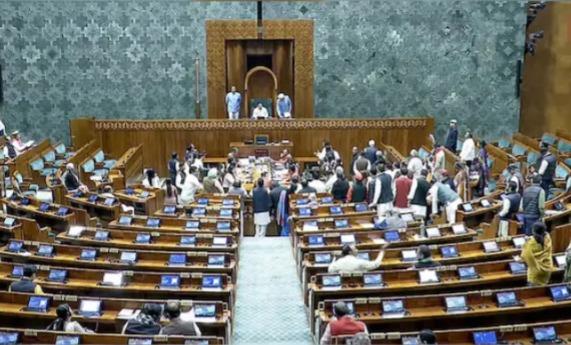
New Delhi: The first phase of Parliament’s Budget Session has commenced with President Droupadi Murmu addressing the joint Houses, setting the stage for the Union Budget presentation by Finance Minister Nirmala Sitharaman later this week. This phase of the session will continue until February 13, with the second phase scheduled to begin on March 9.
Opposition parties are preparing to challenge the government on multiple fronts during the session. Key issues they intend to raise include recent statements by US President Donald Trump concerning India, the replacement of the MGNREGA law with the new G RAM G Act, and complications arising from the Special Intensive Revision (SIR) of voter lists in several states. Regional parties, such as the Telugu Desam Party, are also expected to press for a social media ban for teenagers aged 0–16 and may question the government on its stance toward geopolitical developments.
In a preparatory all-party meeting chaired by Defence Minister Rajnath Singh, the government made it clear that discussions on the G RAM G Act and SIR would not be entertained during the Budget Session, citing that these issues had already been debated in detail in previous parliamentary sittings. Officials emphasized that the focus of the session should remain on the Budget and related legislative business to ensure smooth proceedings.
The session will follow the traditional sequence, beginning with the President’s address, followed by the release of the Economic Survey, the presentation of the Union Budget, and debates on the Motion of Thanks to the President’s address, with the Prime Minister responding. While some contentious issues are expected to be highlighted, certain matters, such as the new UGC regulations, are unlikely to dominate the discussions, as major political parties are remaining largely silent to avoid upsetting their voter bases.
Political analysts anticipate a spirited and possibly confrontational session, with the opposition aiming to hold the government accountable on various national and international matters, while the government seeks to maintain focus on legislative priorities and economic planning. The outcome of this session is likely to shape both the legislative agenda and the political narrative ahead of key elections later this year.
Sorry, there was a YouTube error.