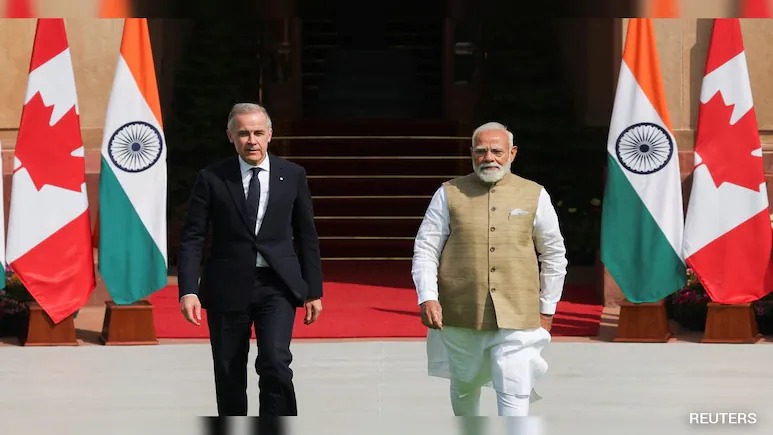
New Delhi: Canadian Prime Minister Mark Carney has positioned Canada as a key energy partner for India, stating that the country is well placed to support India’s rapidly rising energy needs over the coming decades.
Speaking alongside Prime Minister Narendra Modi in a video statement, Carney highlighted Canada’s capacity to supply reliable and low carbon Liquefied Natural Gas. He noted that Canadian LNG is already widely used across Asia and Europe for heating, electricity generation and industrial purposes.
India’s demand for energy is projected to grow significantly, with expectations that consumption could double by 2040. Against this backdrop, Carney said Canada could play a major role in supporting India’s long term energy security.
The Canadian leader also pointed to the country’s strong position in the global mining sector, noting that a large share of the world’s mining companies are listed in Canada. This, he said, makes Canada an attractive partner for India as it seeks access to critical minerals required for manufacturing, clean technology and nuclear energy projects.
India is also planning a major expansion in renewable power, aiming to add around 500 gigawatts of renewable energy capacity by the end of the decade. At the same time, the country intends to increase the share of LNG in its primary energy mix as part of efforts to meet rising demand while transitioning to cleaner fuels.
India has recently indicated its interest in purchasing a range of Canadian energy resources, including crude oil, liquefied petroleum gas, LNG and uranium. Discussions have also focused on improving approval processes to ensure supplies can move more quickly to meet the needs of India’s expanding economy.
Union Minister Hardeep Singh Puri emphasised that India continues to diversify its energy imports beyond the Middle East in order to maintain stable fuel supplies. He said the government is working to secure multiple supply routes and sources to ensure uninterrupted availability of energy for households and industry.
The developments come amid heightened geopolitical tensions in West Asia, where disruptions in energy supplies have pushed prices higher and increased concerns about global fuel security.
Sorry, there was a YouTube error.