New Delhi: In a move drawing sharp criticism, the Union government has reaffirmed that the World Health Organization’s air quality guidelines are only “guidance documents” and not binding standards for India. The statement came from Minister of State for Environment Kirti Vardhan Singh in a written reply to the Rajya Sabha.
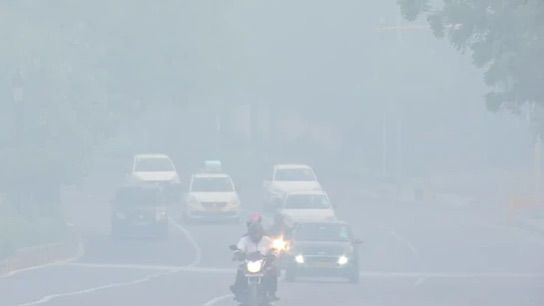
The clarification follows the release of the 2024 World Air Quality Report, which revealed that 13 of the world’s 20 most polluted cities are in India. Meghalaya’s Byrnihat ranked as the most polluted globally, while Delhi remained the world’s most polluted capital for the sixth year in a row.
Singh argued that international assessments lack “official authority” and asserted that India’s pollution standards must reflect “local geography, socio-economic conditions, and even the immune power of its people.” He defended the continued use of the 2009 National Ambient Air Quality Standards, which set India’s annual PM2.5 limit at 40 micrograms per cubic metre—a threshold unchanged for 16 years.
In contrast, the WHO’s 2021 guidelines recommend a much stricter annual PM2.5 level of 5 micrograms per cubic metre, eight times lower than India’s standard. Independent air monitoring places India’s current urban average at 50.6 micrograms per cubic metre, exceeding even the country’s own limits.
While Singh is technically correct that WHO norms are not legally binding, environmental experts say India must align its standards with the latest scientific evidence. Critics argue that the government’s reliance on the Swachh Vayu Survekshan ranking system is also flawed, as it heavily rewards bureaucratic compliance rather than actual reductions in pollution levels. Even cities ranked as “top performers” continue to record PM2.5 levels of 70–80 micrograms per cubic metre, far above safe limits.
The debate highlights a growing divide between scientific recommendations and policy decisions at a time when India faces severe and worsening air quality challenges.