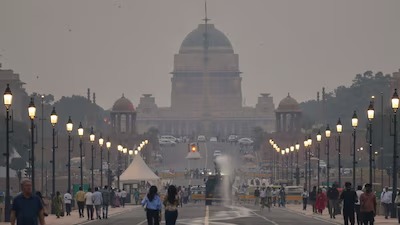
The offer comes amid hazardous air quality levels in the capital and surrounding areas that dropped to “severe” category
New Delhi: As Delhi and its surrounding regions continue to struggle under a blanket of toxic smog, China has extended an offer to assist India in addressing its escalating air pollution problem. The capital’s air quality has remained in the “severe” category for several consecutive days, with dangerous pollution levels choking residents across the National Capital Region (NCR).
In a post on social media, Chinese Embassy spokesperson Yu Jing said that China had faced similar air quality challenges in the past and was “ready to share its experience and journey toward achieving cleaner skies.” The message reflects Beijing’s willingness to cooperate on environmental management, drawing from its own efforts over the past decade to curb urban pollution.
Delhi’s overall Air Quality Index (AQI) stood at 420 on Tuesday, firmly in the “severe” range. Several monitoring stations, including Anand Vihar (403), Ashok Vihar (370), Bawana, and Burari Crossing (above 390), recorded some of the worst levels. In neighbouring Noida, AQI levels ranged from 323 to 357 across major sectors, while Ghaziabad’s Loni area touched 420 — the same as Delhi’s worst readings.
Experts have warned that the current conditions pose serious health risks, particularly for children, senior citizens, and those with respiratory illnesses. Prolonged exposure can lead to aggravated asthma, eye irritation, and increased vulnerability to infections. Health authorities have advised residents to reduce outdoor activities and wear protective masks when stepping outside.
The India Meteorological Department has forecast a gradual drop in temperatures between November 4 and November 9, with Noida’s maximum expected to dip from 29°C to 27°C and the minimum from 19°C to 15°C. A light drizzle is also predicted for parts of Delhi-NCR, which could temporarily ease pollution levels.
While experts say rain and changing wind patterns may bring short-term relief, they caution that sustainable improvement will depend on long-term policy measures, including stricter emission controls and coordinated regional action to tackle crop burning and vehicular emissions.