New Delhi: Adani Group chairman Gautam Adani announced that the conglomerate achieved a 16.5% return on assets (ROA) in the financial year 2024-25, placing it among the world’s highest performers in the infrastructure sector. He credited the strong results to disciplined expansion, efficient capital use, and a focus on productivity across business verticals.
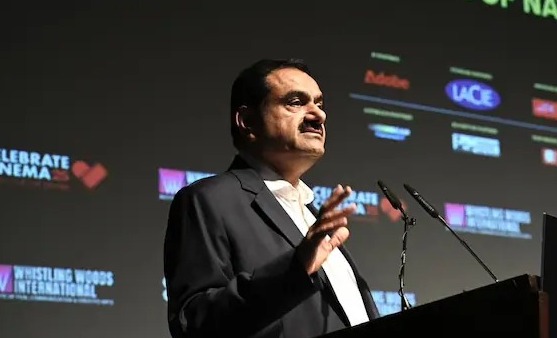
Speaking at the annual Shantilal Adani Lecture Series, Adani said the figure demonstrates the Group’s ability to generate profitable growth and sustain investor confidence. “Our growth is profitable, our assets are productive, and our capital is working with precision,” he noted.
He added that the company’s net debt-to-EBITDA ratio stood at 2.6 times, reflecting a strong balance sheet. With robust internal cash generation, the Group plans to finance a large portion of its USD 100 billion five-year capital expenditure plan through internal accruals, minimizing its dependence on external borrowing.
Adani said the strong return on assets has strengthened the Group’s credibility among lenders and investors, enabling it to pursue new opportunities while maintaining financial stability. “It fortifies our ability to take bold bets while preserving balance sheet integrity,” he said.
Highlighting a USD 500 billion opportunity in India’s electricity sector by 2032, Adani revealed that the Group aims to capture 20% of that market. He also unveiled the “Two-Track Organization” model for the next phase of growth, which combines artificial intelligence with human judgment. “The Agentic Track will drive precision through data, while the Human Track will guide decisions with ethics and experience,” he explained.
Adani outlined key initiatives such as the Finance Control Tower, offering real-time visibility into operations, and a Global Capability Center that integrates AI-led finance workflows. “Finance is now the cockpit of strategic control, where foresight meets discipline,” he emphasized.
Reflecting on the Group’s philosophy, Adani said the world is at a turning point where technology, capital, and human potential intersect. He called this era one for “daring and reinvention,” urging businesses to build with both intelligence and purpose.