Team Goemkarponn
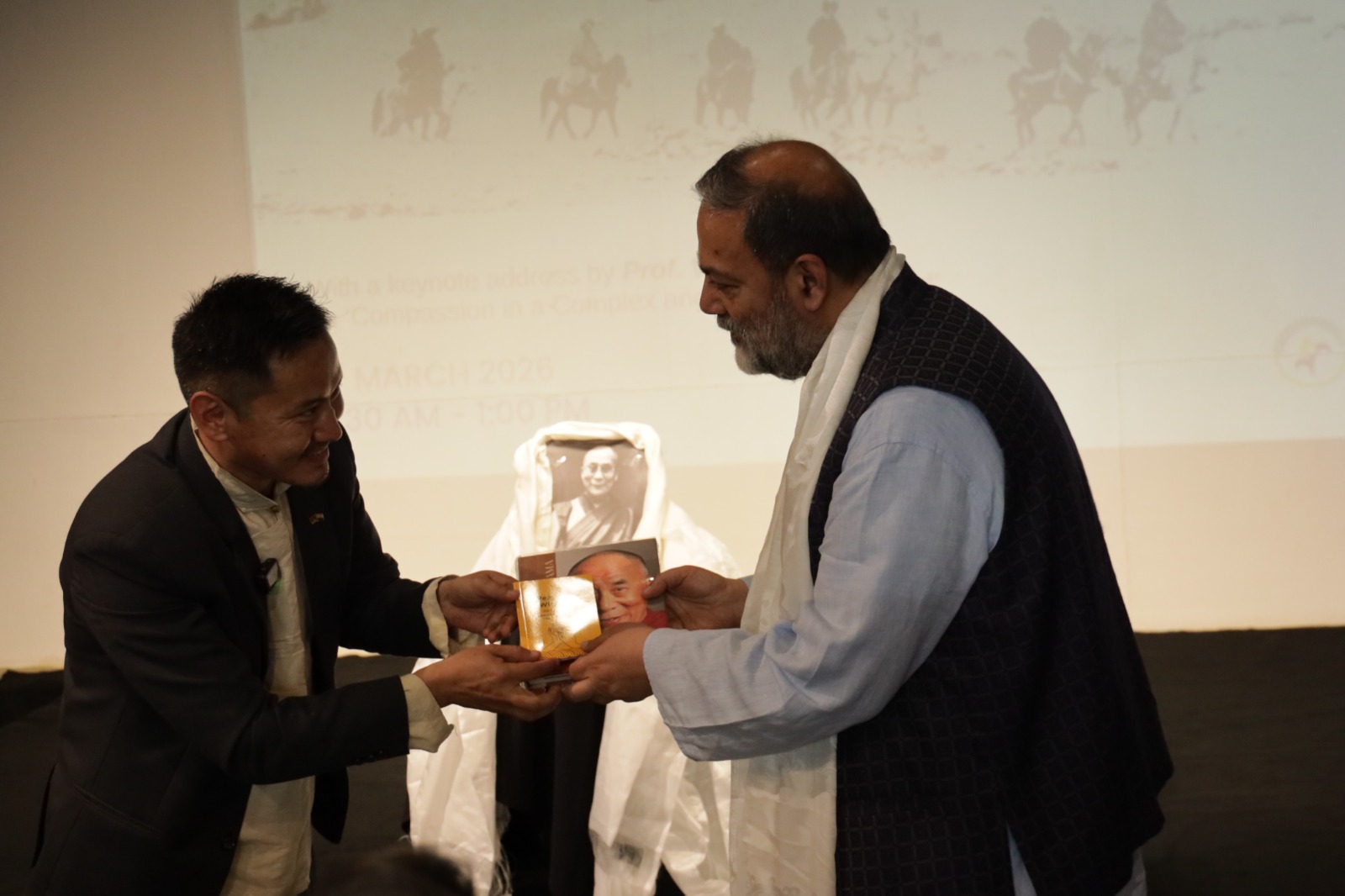
PANAJI: Compassion must play a central role in international decision making if the world hopes to reduce conflict in an increasingly uncertain global environment, Prof. Varun Sahni said while inaugurating the exhibition Refuge, Rights & Resilience: The Tibetan Story at the Museum of Goa.
The exhibition has been jointly curated by the Tibet Museum and the Museum of Goa as part of the larger initiative The Infinite Ripple – 90 Years of Compassion. The event also featured a keynote address titled “Compassion in a Complex and Often Cruel World.”
During the talk, Sahni reflected on the evolving global order, highlighting challenges such as geopolitical power shifts, rising extremism and environmental degradation. He argued that many global crises are intensified by a lack of compassion in policy making and international relations.
Recalling an earlier interaction with Tenzin Gyatso, Sahni said he was once told that conflict in world politics would remain unavoidable until compassion became the foundation of decision making. Over time, he said, the significance of that observation had become increasingly clear.
Sahni outlined three broad categories of contemporary global problems. These include emerging challenges like climate change and pandemics, long standing issues such as trade and resource scarcity that now require new solutions, and traditional security concerns complicated by the involvement of new actors and technologies. He described the current global moment as one shaped by rapid technological change, fragile political systems and growing cultural polarisation.
Discussing the roots of cruelty in human behaviour, Sahni suggested it can stem from insecurity, learned attitudes, power dynamics or destructive impulses. However, he stressed that expanding empathy can counter many forms of cruelty. Compassion, he explained, goes beyond empathy because it motivates action and a willingness to help others.
The exhibition highlights the Tibetan experience of exile since 1959 and the efforts to preserve cultural identity without territorial sovereignty. Tenzin Topdhen described the display as a story of resilience and human endurance.
Through archival documents, photographs and personal narratives, the exhibition explores themes of memory, rights and cultural continuity. It will remain open to visitors at the Museum of Goa until March 8.