Team Goemkarponn
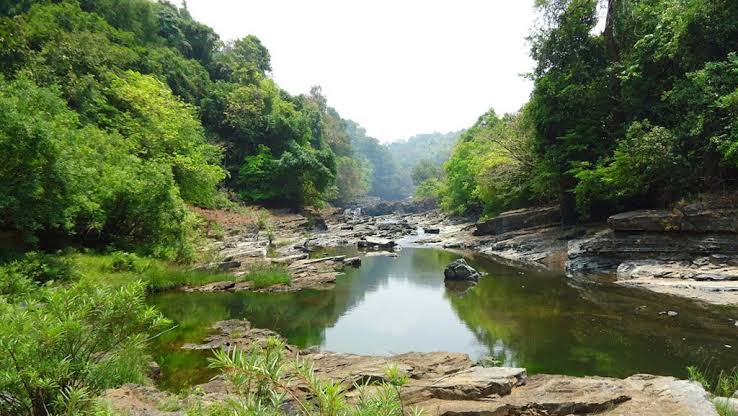
PANAJI: Residents living in and around Bandhura, near the Goa-Karnataka border, have expressed concern after noticing a sharp drop in water levels in the nullah this year.
The Bandhura nullah, a key perennial stream that merges with the Mhadei river near Nerse, plays a crucial role in sustaining both local communities and wildlife. It originates in the forests of Jamgao and flows towards Goa after joining the Mhadei.
A team of villagers from the Mhadei basin in Karnataka visited Nerse on March 29 and observed a significant decline in water levels compared to the previous year. Environmentalist Rajendra Kerkar, who accompanied the group, warned that the reduced flow could have serious ecological consequences. “The drop in water levels is clearly noticeable and could impact the region’s environment in the long run,” he said.
The development has also reignited concerns over Karnataka’s proposed Bandhura project, which involves diverting 2.18 TMC of water into the Malaprabha basin. The plan includes construction of a diversion weir, a jackwell-cum-pump house, an electrical substation, as well as pipelines and power lines in Nerse and Manturga villages of Khanapur taluka.
While the Central Water Commission has already granted technical clearance to the revised project report, the proposal is yet to receive full environmental approval. The Regional Empowered Committee of the Union Ministry of Environment, Forest and Climate Change recently deferred forest clearance, seeking additional details from Karnataka regarding the project’s environmental impact.
Adding to the concerns, a detailed study by scientists and experts from Karnataka has flagged potential violations of key environmental laws, including the Wildlife Protection Act (1972), the Forest Conservation Act (1980), and the Environment Protection Act (1986). The report cautions that the project could cause lasting damage to forests and ecosystems in the region.
Locals say the nullah is vital for drinking water, irrigation, and sustaining biodiversity, and fear that any further reduction in flow could have far-reaching consequences.