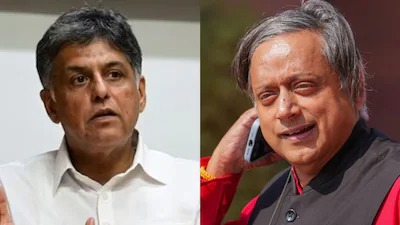
New Delhi: Differences have surfaced within the Indian National Congress over India’s response to the escalating tensions in West Asia, with senior leaders Shashi Tharoor and Manish Tewari publicly supporting the government’s diplomatic stance even as the party leadership criticised it.
Tharoor defended the Centre’s handling of the crisis involving Iran, Israel and the United States, describing India’s approach as an example of responsible statecraft rather than a failure of moral leadership. He argued that while the conflict raises important questions under international law, India’s restrained response reflects careful strategic judgment and a focus on national interest.
He emphasised that diplomatic silence should not be interpreted as support for military actions, noting that foreign policy often requires balancing principles with practical consequences. According to Tharoor, strong rhetorical condemnation may overlook the complex geopolitical realities of the region and the stakes involved for India.
The remarks stand in contrast to the position taken by several senior leaders within the party. Congress president Mallikarjun Kharge and other prominent figures including Rahul Gandhi, Jairam Ramesh and Pawan Khera have questioned the government’s response, particularly regarding Israeli military actions and reports of targeted strikes against Iran’s leadership.
Some party leaders have argued that India should clearly oppose unilateral military actions, warning that silence on such developments risks diluting the country’s longstanding foreign policy principles and moral position in international affairs.
Supporting the government’s cautious approach, Tewari highlighted that India has historically played a limited role in the region’s conflicts. He cautioned against being drawn into disputes that do not directly involve India, noting that the region is currently experiencing several overlapping conflicts. According to him, choosing sides would neither influence outcomes nor serve India’s interests.
Tewari also stressed the importance of maintaining strategic autonomy in foreign policy, stating that India’s measured response aligns with its long standing diplomatic approach.
The divergence within the party is not unprecedented. Similar differences had earlier emerged during Operation Sindoor, when Tharoor praised the government’s diplomatic posture while participating in a multi party global outreach initiative, prompting criticism from sections within his own party.