Team Goemkarponn
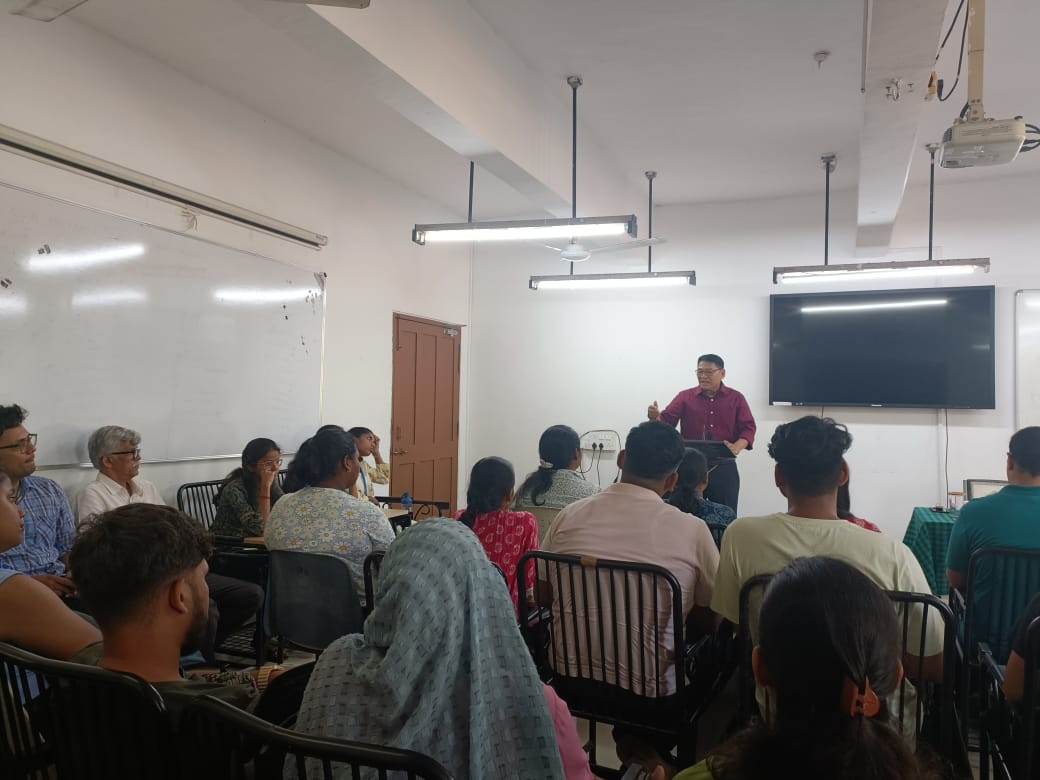
PANAJI: “Consultation with civil society is not just helpful but essential in reducing conflicts when implementing policies,” emphasized John S. Shilshi, IPS (Retd.), during his lecture on “Conflict Resolution and Public Policy” at Goa University.
Organized by the Social Work Programme at the D. D. Kosambi School of Social Sciences and Behavioural Studies, the event drew 60 students from sociology, public administration, law, and social work, along with faculty members.
The session began with a warm welcome by Prof. Ganesha Somayaji, Dean of the D. D. Kosambi School, who highlighted the importance of the lecture in helping students understand the practical applications of conflict resolution in policymaking.
Drawing from his extensive career as a senior law enforcement officer, Mr. Shilshi provided a compelling analysis of how trust deficits often become the biggest barriers to peace and effective policy implementation.
Using examples from neighboring countries, Goa, and other Indian states, he illustrated how inclusive governance, and participatory policymaking can foster sustainable solutions.
“Policies succeed when they inspire trust and involve those they impact. Civil society consultation ensures that policies address real needs and reduce resistance,” he stated, underscoring the need for grassroots engagement to bridge divides.
The lecture included real-world success stories, such as Mr. Shilshi’s leadership in counter-insurgency operations in Manipur, where collaboration with local stakeholders and trust-building were key to mitigating conflicts.
Examples from Goa further demonstrated how involving civil society can address socio-political challenges effectively.
The interactive session encouraged students to delve deeper into issues surrounding participatory governance and trust-building. Mr. Shilshi’s practical insights offered students a nuanced understanding of the complexities of policymaking in conflict zones.
Peter F. Borges, Assistant Professor of Social Work and Coordinator remarked, “This session was an invaluable opportunity for our students to learn from someone who has worked at the intersection of governance and conflict resolution. Mr. Shilshi’s emphasis on consultation and trust-building provides a vital framework for addressing contemporary challenges.”
The event concluded with participants expressing a renewed appreciation for the role of public policy in conflict resolution. As part of its commitment to fostering interdisciplinary learning, the Social Work Programme at Goa University continues to host such impactful sessions, preparing students to address real-world challenges with knowledge and empathy.