Team Goemkarponn
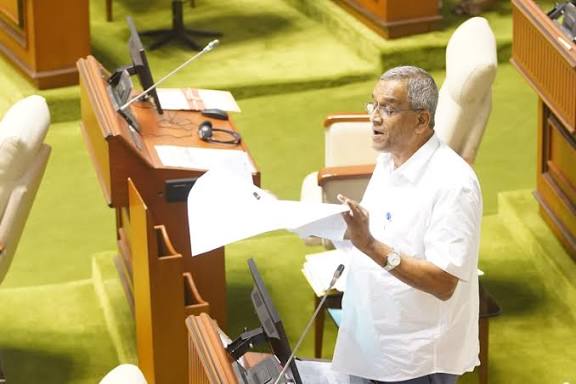
PANAJI: Power Minister Sudin Dhavalikar assured electricity consumers in Goa that no payment will be required from consumers for the installation of smart meters, clarifying concerns over the ongoing rollout under the Revamped Distribution Sector Scheme (RDSS).
Dhavalikar said the smart metering project, with an estimated cost of Rs 890.11 crore, involves the installation of 7,50,356 smart meters across the State. “Consumers are not required to pay any amount for installation of smart meters. The entire cost is being borne through government funding and the project structure,” the Minister said.
He informed that the project follows the Advanced Metering Infrastructure Service Provider (AMISP) model, under which payments will be made on a per-meter, per-month basis for a period of 93 months, instead of upfront capital expenditure.
Out of the total project cost, Gross Budgetary Support of Rs 70.11 crore will be funded by the Central Government under the RDSS scheme, easing the financial burden on the State.
Addressing data privacy concerns, Dhavalikar said only electricity consumption-related parameters will be collected. “All meter data is encrypted during transmission and storage, strictly following government-mandated cybersecurity protocols and industry standards,” he said.
He added that access to consumer data will be role-based and restricted to authorized personnel of the Electricity Department and AMISP. Usage data will be analysed in aggregated or anonymised form wherever feasible and will not be shared with third parties without departmental approval and statutory compliance.
The Minister said routine security audits and continuous system monitoring will be conducted to ensure confidentiality, integrity and compliance with data protection norms. “Consumer data privacy remains paramount, and comprehensive safeguards—technical, contractual and procedural—are in place to prevent misuse,” he said.
Explaining the need for meter accessibility, Dhavalikar said utility staff must have access to meters to disconnect supply in case of non-payment or emergencies such as fire, inspect possible tampering, and check the physical condition of meters and electrical installations. “This is a universal practice followed by all utility services,” he added.
He further said that smart meters will be installed outside consumer premises, after shifting of existing meters by consumers, with necessary wiring changes carried out as per technical requirements.
Sorry, there was a YouTube error.