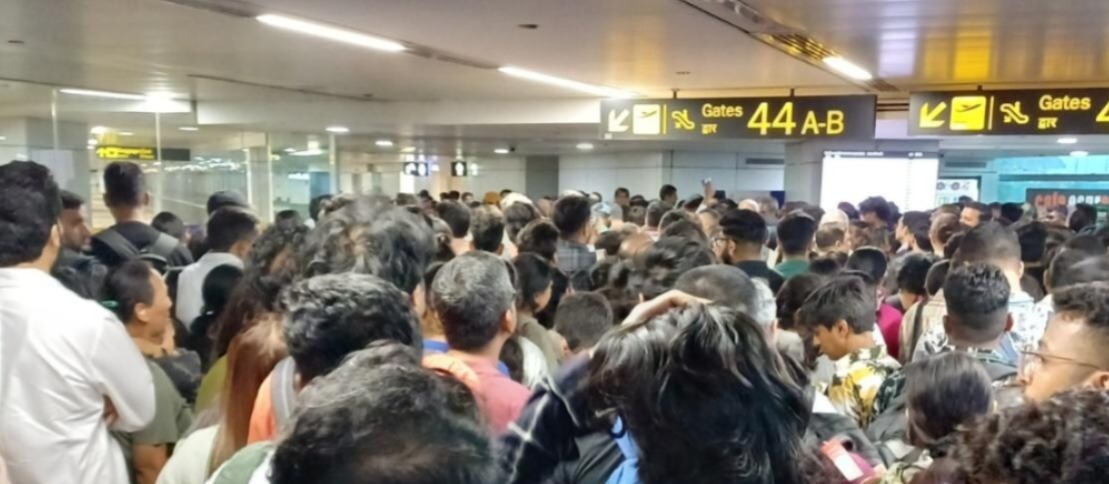
New Delhi: A hectic morning unfolded at Delhi’s Indira Gandhi International Airport on Friday after a technical failure in the air traffic control system led to more than a hundred flights being delayed. Airport authorities said teams were working urgently to resolve the issue and advised passengers to stay in touch with their airlines for the latest updates.
The problem originated in the Automatic Message Switching System, a key component that supports air traffic control data. With the system down, controllers had to switch to manual processing of flight plans, causing immediate bottlenecks across operations. Airlines alerted passengers to check their flight status before heading to the airport, noting that delays and extended wait times were likely.
The situation added to the disruptions that passengers have already been facing this week. A server outage the previous evening had delayed at least 20 flights before the system was restored. To complicate matters further, suspected GPS spoofing incidents over the past several days have affected aircraft approaching the capital, forcing multiple diversions and creating congestion throughout the airspace.
GPS spoofing involves the transmission of fake satellite signals that overpower genuine ones, causing aircraft systems to register incorrect position or altitude readings. These false coordinates can mislead navigation instruments by hundreds or even thousands of kilometers, posing serious risks during approach or landing. Flights operated by several airlines recently reported such distortions near Delhi, with a number diverted to Jaipur as a precaution.
The timing of these incidents has heightened operational strain. One of IGI’s key runways remains partially closed for an upgrade to a more advanced landing system, leaving aircraft dependent on GPS-based navigation methods currently vulnerable to interference. A sudden shift in wind direction also forced a reversal of runway operations, further slowing traffic flow.
The combined challenges have resulted in long queues at terminals, delays on the tarmac, and slower sequencing in the air. Airlines said their crews were working closely with airport teams to manage the backlog and restore efficiency. Aviation authorities are now investigating the source of the spoofed signals and assessing measures to strengthen navigation reliability at India’s busiest airport.