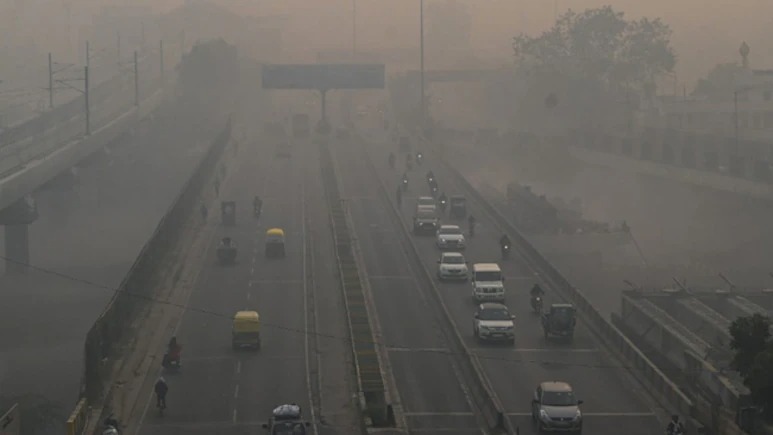
New Delhi: A new survey across Delhi-NCR has revealed the severe impact of persistent air pollution on daily life, with a large majority of residents reporting significant health problems, rising expenses and growing uncertainty about continuing to live in the region. The findings indicate deepening concerns as hazardous air quality increasingly disrupts routines, wellbeing and long-term decisions for families.
According to the Smytten PulseAI survey of 4,000 residents in Delhi, Gurugram, Noida, Ghaziabad and Faridabad, more than 80 per cent of respondents said they regularly experience symptoms such as chronic cough, fatigue and respiratory discomfort linked to polluted air. The study highlighted that 68.3 per cent sought medical attention over the past year specifically for pollution-related issues, signalling a widening public health challenge.
The worsening conditions have forced behavioural shifts across households. Nearly 76.4 per cent reported significantly reducing their time outdoors, with many describing their homes as the only safe refuge from the toxic smog. The impact is not limited to health; pollution is also shaping key life decisions. Nearly 80 per cent are either planning to move out of the region or considering it seriously. Of these, 33.6 per cent are already preparing relocation plans and 15.2 per cent have left. About 37 per cent have taken concrete steps such as evaluating properties, contacting schools in other cities or discussing relocation with family members. Preferred destinations include hill towns, smaller cities and other regions perceived to offer cleaner air and lower industrial activity.
The financial burden of coping with poor air quality is also rising. The survey found that 85.3 per cent of households have seen their expenses increase due to pollution-related needs, with 41.6 per cent reporting substantial strain. Higher spending on healthcare, air purifiers, masks and indoor safety measures has become common across middle-class families.
The study’s organisers noted that extended exposure to poor air quality is now reshaping lifestyle patterns and living preferences. They emphasised the need for sustained, data-driven and coordinated interventions to address the worsening situation and restore healthier living conditions in the region.
Sorry, there was a YouTube error.