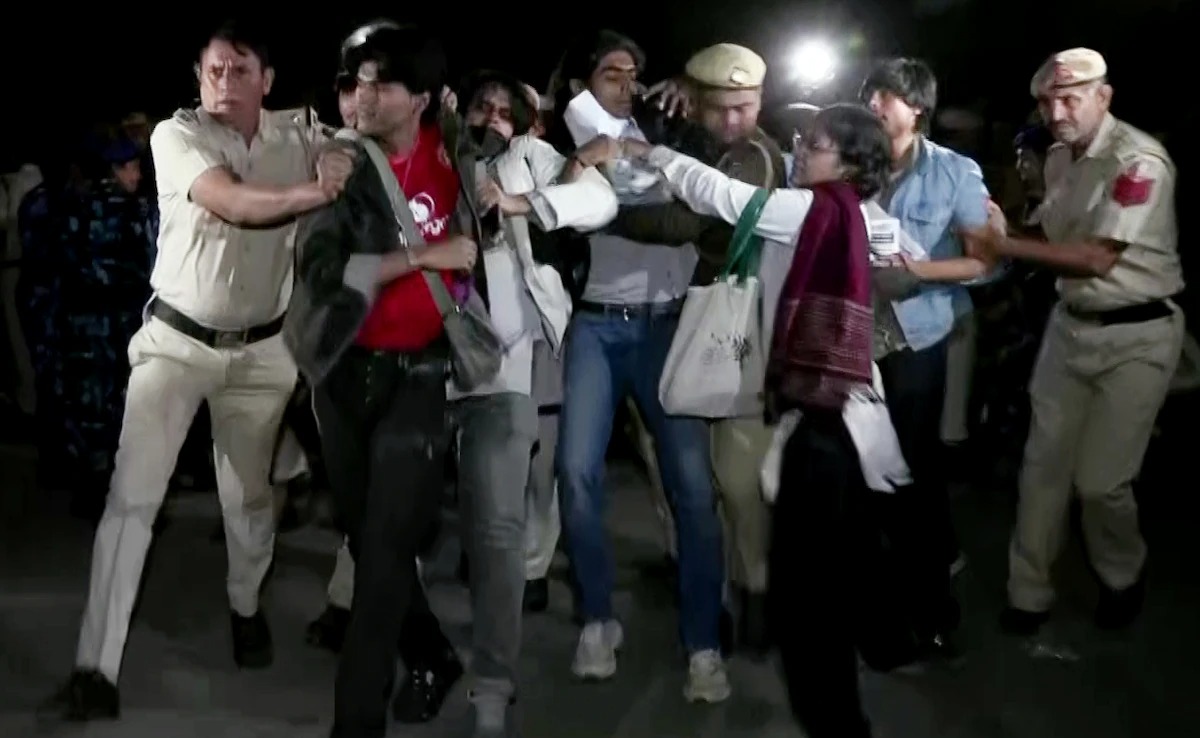
New Delhi: A peaceful demonstration at India Gate on Sunday turned tense when police detained several protesters, including children, as Delhi’s air quality index climbed to 370 in the “very poor” category. Residents, parents, students and environmental groups had gathered with placards demanding decisive action on the city’s recurring winter pollution crisis.
Protesters said the worsening air quality had become a public health emergency and criticised what they saw as years of ineffective policy responses. Many participants voiced frustration that vulnerable groups such as street vendors, auto drivers and children bear the brunt of the pollution. They argued that long-term solutions like cleaner public transport and stronger monitoring systems were essential to breaking the annual cycle.
Some attendees questioned the credibility of official pollution readings after social media videos circulated showing water being sprayed near monitoring stations on days when the AQI spiked. Others raised concerns about unchecked construction, shrinking green spaces and the lack of measures to protect senior citizens and school-going children.
Doctors at the protest highlighted the severe health impact of prolonged exposure to toxic air, pointing to lung damage in children, rising cases of asthma and long-term risks such as heart disease and stroke. They said these effects begin early in life and can reduce life expectancy significantly.
Organisers claimed they faced pressure in the days leading up to the protest, including repeated calls and alleged warnings from local police. Authorities, however, maintained that gatherings were restricted under Section 163 and that the detentions were precautionary because the demonstration lacked permission. Officials said India Gate is not a designated protest site and directed participants toward Jantar Mantar.
Environmental activists criticised the detentions, saying the public was seeking accountability at a time when pollution levels in parts of the city were reportedly reaching extreme highs. They argued that measures such as cloud seeding or temporary advisories were inadequate and that substantial steps were needed to address emissions from construction, vehicles and industry.
Political leaders weighed in, with some accusing government agencies of manipulating pollution data and others arguing that recent interventions had already begun addressing long-standing environmental problems.