Team Goemkarponn
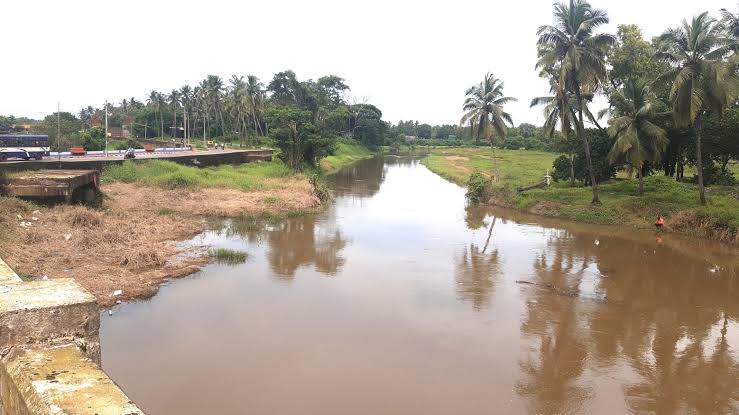
PANAJI: While Goa has made notable progress in reducing the number of polluted river stretches over the past six years, the worsening condition of the Sal river has emerged as a major environmental concern.
Pollution levels in the river have now crossed critical thresholds, raising alarm among authorities.
Data from the Central Pollution Control Board (CPCB) shows that the total number of polluted river stretches in the state dropped from 11 in 2018 to just two by 2023.
However, the Sal river has seen a sharp decline in water quality. Once classified under Criteria IV, with biochemical oxygen demand (BOD) levels ranging from 6–10 mg/L, it now records BOD levels above 20 mg/L.
The stretch between Rumder and Orlem Bridge has been identified as particularly polluted.
The Mapusa River remains the only other river in the state still failing to meet water quality standards, showing no improvement in BOD levels and continuing under Criteria V.
The CPCB report notes that 15 rivers were monitored at 32 locations across Goa during 2022–23, and four sites across two rivers were found non-compliant with prescribed BOD limits.
To address the issue, the board has recommended a comprehensive restoration plan that emphasizes controlling pollution at its source, managing sewage and industrial effluents, and improving solid waste treatment.
Measures such as river basin management, floodplain protection, rainwater harvesting, groundwater recharge, and sustainable irrigation practices have also been highlighted.
Goa had 11 highly polluted river stretches in 2018, which reduced to six by 2021, including sections of the Mandovi, Zuari, Sal, Khandepar, Mapusa, and Kalna rivers. Despite this overall progress, the sharp decline in the Sal river’s health stands out as a critical environmental warning for the state.