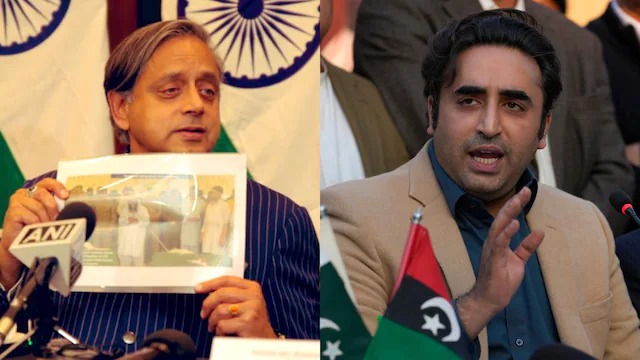
New Delhi: A high-profile diplomatic showdown is unfolding in Washington as two rival delegations from India and Pakistan find themselves in the U.S. capital at the same time. Leading the Indian side is senior Congress MP Shashi Tharoor, while Bilawal Bhutto Zardari heads the Pakistani delegation. Both teams are engaging U.S. lawmakers, think tanks, and media to present their narratives, with India focusing on exposing Pakistan’s links to terrorism in the aftermath of Operation Sindoor.
Tharoor’s team arrived in Washington after a diplomatic outreach tour covering Guyana, Panama, Colombia, and Brazil. The mission is part of a larger Indian effort to present its stand against terrorism globally and detail the context behind Operation Sindoor, launched in response to the Pahalgam terror attack on April 22.
Tharoor: “India Will Deliver Its Message”
Calling the situation “interesting,” Tharoor highlighted the rare occurrence of two “duelling delegations” present in the same city. He expressed confidence in India’s ability to convey its message effectively to stakeholders in the U.S., especially those with an interest in South Asia and counter-terrorism.
“America is a crowded media space. But we aim to reach those who care about India, South Asia, and global security,” Tharoor told ANI. He noted the symbolic importance of the overlapping visits and predicted increased attention on both delegations due to their simultaneous presence.
Packed Schedule for Indian Delegation
Tharoor outlined a packed itinerary in Washington, including meetings with U.S. government officials, senators, congressmen, and key committees. The delegation will also interact with influential think tanks and address forums like the National Press Club. Tharoor himself has been invited for six to eight interviews with major American broadcasters and podcasters.
“Our engagements span across the spectrum of opinion makers in Washington—policymakers, analysts, and media,” he said.
Pakistan’s Copycat Diplomacy?
Tharoor suggested that Pakistan’s simultaneous visit was not a coincidence but a reactionary move to India’s global outreach campaign. While India’s delegations have visited multiple global capitals, including Washington, Brussels, and London, Pakistan’s diplomatic push appears limited in scope.
“It’s no accident they sent a delegation now. But they haven’t gone to as many countries as we have. Their focus is narrow,” Tharoor remarked.
Pakistan’s delegation, led by PPP Chairman Bilawal Bhutto, was tasked by Prime Minister Shehbaz Sharif in May to present Islamabad’s perspective internationally, particularly in Western capitals.
Operation Sindoor and Tensions with Pakistan
India and Pakistan were engaged in a four-day military confrontation from May 7 to 10, following Indian strikes on terror targets in Pakistan and Pakistan-occupied Kashmir. In response, Pakistan launched counter-offensives, prompting India to strike back at 11 Pakistani airbases.
Following the escalation, Pakistan requested a ceasefire, which India accepted conditionally. Prime Minister Narendra Modi later clarified that Operation Sindoor has not concluded but is currently paused, warning that any future terror attacks will be treated as an “act of war.”
As diplomatic duels unfold in Washington, both nations are making their cases to the international community, with India aiming to shape the global narrative around terrorism and regional security, and Pakistan attempting to counter that narrative amid growing scrutiny.
Sorry, there was a YouTube error.