 New Delhi: The Supreme Court will on Friday hear a plea by non-profit organisation, the Association for Democratic Reforms (ADR), which has sought to restrain the Union government from appointing two new election commissioners under a new law — The Chief Election Commissioner and Other Election Commissioners (Appointment, Conditions of Service and Term of Office) Act, 2023.
The plea demanded that until the legality of the new law was decided, the SC should order the government to fill the two positions through a consultative procedure that involves the Chief Justice of India (CJI) in the selection panel.
“I have received a message from the office of the Chief Justice of India. This matter will be listed on Friday,” justice Sanjiv Khanna informed advocate Prashant Bhushan on Wednesday.
Bhushan, who represents ADR, had first mentioned the matter before justice Khanna on Tuesday when the judge asked him to send an email to the registrar concerned for seeking appropriate direction from the CJI. The CJI, as the master of the roster, functions as the administrative head of the Supreme Court, directing for marking cases to different benches and assigning initial dates.
Through a consultative process being adopted for the first time under the new law, two vacancies in the Election Commission of India (ECI), created by the surprise resignation of EC Arun Goel and the retirement of Anup Chandra Pandey, are likely to be filled by March 15. Currently, the ECI is left with Chief Election Commissioner (CEC) Rajiv Kumar as the sole member.
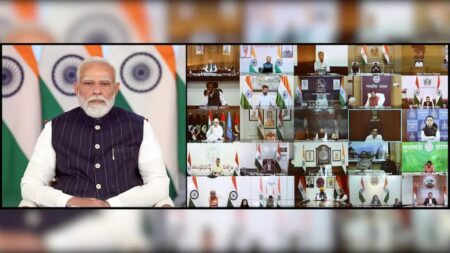
A high-level selection committee, headed by Prime Minister Narendra Modi and comprising a Union minister and Lok Sabha leader of opposition Adhir Ranjan Chowdhury, is likely to meet later this week to finalise the appointments.
In its plea, ADR has requested the top court to stay the operation of Section 7 of the 2023 Act, which envisages the composition of the panel to appoint CEC and ECs. It has claimed that the composition of the committee amounts to excessive interference of the executive in the appointment of CEC and ECs and is detrimental to the independence of the ECI.
“The selection committee, which is ex facie dominated and controlled by the members from executive, i.e., Prime Minister and Union cabinet minister (to be nominated by the Prime Minister) renders the selection process vulnerable to manipulation as it gives unfettered discretion to the ruling party to choose someone whose loyalty to it is ensured,” added ADR.
The plea highlighted how the new law marked a crucial departure from a judgment of a Constitution bench of the Supreme Court in March last year, which directed for inclusion of the CJI in the selection panel until Parliament came up with a new law. The judgment in Anoop Baranwal Vs Union of India had said that the selection of CEC and ECs should be done by a panel headed by the Prime Minister and comprising two other members – leader of Opposition in Lok Sabha and the CJI, to ensure transparency in the selection mechanism.
Sorry, there was a YouTube error.