New Delhi: The iconic MiG-21, India’s first supersonic fighter jet and a cornerstone of the Indian Air Force for nearly six decades, is set to retire on September 26. Ahead of its final farewell, the IAF will conduct a full dress rehearsal on Wednesday, bringing attention back to an aircraft that has shaped India’s air combat history. The farewell ceremony will be held in Chandigarh, home to the first squadron of the MiG-21, and will feature a ceremonial flypast led by Chief of the Air Staff, Air Chief Marshal Amar Preet Singh, who will personally pilot a MiG-21 a rare gesture for such occasions. Air Chief Marshal Singh, like many officers before him, has trained on the aircraft and earlier took a sortie at Nal in August to mark its legacy.
The final event will see multiple formations and sorties, with veterans, former chiefs, and pilots who have flown the MiG-21 attending. The commanding officer will formally hand over the F-700 logbook, symbolizing the end of an era as the indigenous LCA Tejas Mark 1A prepares to take its place. Defence Minister Rajnath Singh will also attend the ceremony.
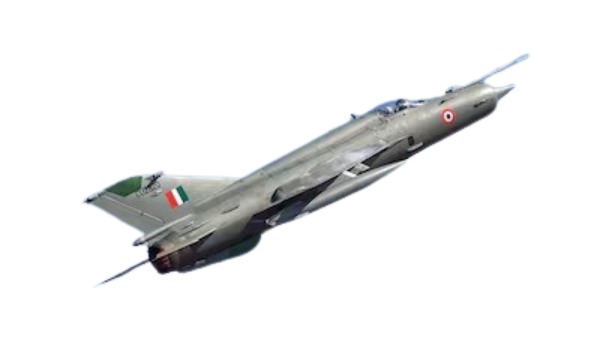
Nicknamed Badal by its pilots, the MiG-21 was inducted in 1963 and went on to become the most numerous fighter in the IAF’s inventory, with over 874 aircraft entering service across six variants: T-66, T-77, T-69, T-96, T-75, and the modernized Bison. Its first squadron, No. 28 Squadron, known as the First Supersonics, was based in Chandigarh. By the time of its retirement, only two units No. 3 Squadron (Cobras) and No. 23 Squadron (Panthers) still operate the type, preserving its legacy to the very end. The oldest surviving MiG-21 Bison in the fleet, CU-2788, continues to fly as a reminder of the type’s remarkable longevity.
The MiG-21 has a storied combat record, participating in nearly every war and conflict involving India since 1965. It saw extensive action during the 1971 war with Pakistan, striking strategic targets in Dhaka, and played a key role in later conflicts, including the Kargil war. Its most recent notable engagement came in 2019, when a MiG-21 Bison, flown by Wing Commander (now Group Captain) Abhinandan Varthaman, shot down a Pakistani F-16. Known for its agility, fast acceleration, and quick turnaround, the MiG-21 became a preferred choice for commanders, training generations of pilots who recall it as both challenging and rewarding.
However, the aircraft also carried a darker reputation. Following a series of crashes in the 1990s and 2000s, which claimed the lives of several young pilots, it earned the public moniker “Flying Coffin.” Despite this, upgrades and rigorous pilot training allowed the MiG-21 to remain in service far longer than originally planned, proving its resilience and adaptability.
Once retired, all worthy aircraft will be sent to training establishments, educational institutions, and museums, ensuring the MiG-21’s story is preserved. The farewell marks not just the retirement of an aircraft but the closing of a defining chapter in the history of the Indian Air Force. The MiG-21 leaves behind a legacy of unmatched service, a symbol of India’s supersonic capability, and a testament to decades of air power that helped shape the nation’s defence landscape.