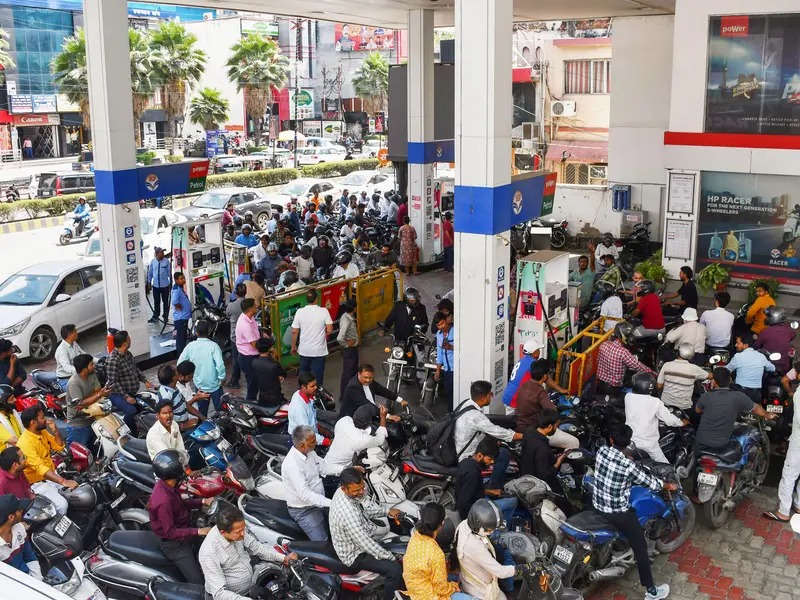
New Delhi: The Union government has reduced central excise duty on petrol and diesel by ₹10 per litre amid rising global oil prices triggered by escalating tensions in West Asia. The move brings the central tax on petrol down to ₹3 per litre, while diesel will now carry zero excise duty.
Despite the sharp reduction in duties, fuel prices at retail pumps may not fall immediately. Industry estimates suggest the benefit of the tax cut will largely be absorbed by oil marketing companies that are currently facing heavy losses on fuel sales.
According to industry calculations, oil companies are losing nearly ₹48.8 per litre on petrol and diesel sold at current pump prices. The losses have been driven by a steep surge in global crude oil rates, with Brent crude crossing the $100 per barrel mark after the conflict involving the United States and Israel with Iran and the resulting disruption to key energy supply routes.
Union Petroleum Minister Hardeep Singh Puri said international crude prices have surged dramatically in recent weeks, rising from about $70 per barrel to roughly $122 per barrel. He noted that many countries across Asia, North America, Europe and Africa have already seen fuel prices increase sharply due to the spike in global energy costs.
The government opted to absorb part of the financial burden rather than pass the entire increase to consumers. Officials indicated that this approach aims to protect citizens from sudden fuel price hikes while maintaining stability in the domestic market.
The global oil disruption has been intensified by developments around the Strait of Hormuz, a vital corridor that carries a large portion of the world’s crude oil and gas shipments. A significant share of India’s crude imports normally passes through this narrow passage, making the situation particularly important for the country’s energy security.
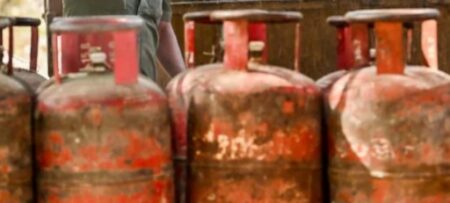
To address supply concerns, authorities have emphasised that India currently holds sufficient reserves. Government data indicates the country has roughly 60 days of crude oil stock and about 30 days of liquefied petroleum gas supply available.
Officials have also accelerated efforts to diversify crude and gas import sources while increasing domestic production of cooking gas to ensure steady supply for more than 33 crore households that rely on LPG for daily use.
Sorry, there was a YouTube error.