Key Demands….
Villagers are calling for:
• Detailed maps showing lands that will be submerged
• Flood studies and new flood level calculations
• Tidal flow impact studies
• Environmental impact assessment
• Protection for affected houses and farms
• Transparency on water usage
• Public consultations with affected residents
• Written assurances on compensation
• Necessary approvals and NOCs before construction
• Independent review of the project
Suraj Nandrekar
Along the banks of the Zuari River, residents of Mirabag and nearby wards have begun voicing strong opposition to a proposed bandhara that they fear could permanently alter their villages, submerge agricultural lands and worsen the floods they already face each monsoon. The project, planned by the Water Resources Department Goa (WRD), is intended to store water and divert it to the Moissal Dam to supply drinking water to parts of Panchawadi and Shiroda.
But locals say the project has moved ahead without basic studies, transparency or consultation. Their question is simple and repeated at village meetings and roadside gatherings: who really benefits from the bandhara?
Fear of submergence
According to WRD estimates shared with residents, the proposed structure will store roughly 300 hectare metres of water and divert between 30 and 50 million litres per day to Moissal dam. Yet villagers say officials have not been able to clearly explain how much land will be submerged or who will be affected.
For many families, this uncertainty is deeply unsettling. The submerged areas would be lost permanently, they say, drawing comparisons with the displacement of residents from Curdi decades ago when a dam project forced villagers to abandon their homes.
“Before starting any work they should tell us exactly which lands will go under water,” said Upendra Naik, a local resident involved in the protests. “Today they cannot even show us a proper map. How can they expect people to accept this?”
Fields along the river form the backbone of the local economy. Many families depend on seasonal crops and coconut plantations. Losing even a portion of this land would affect livelihoods for generations, villagers say.
Floods already a yearly reality
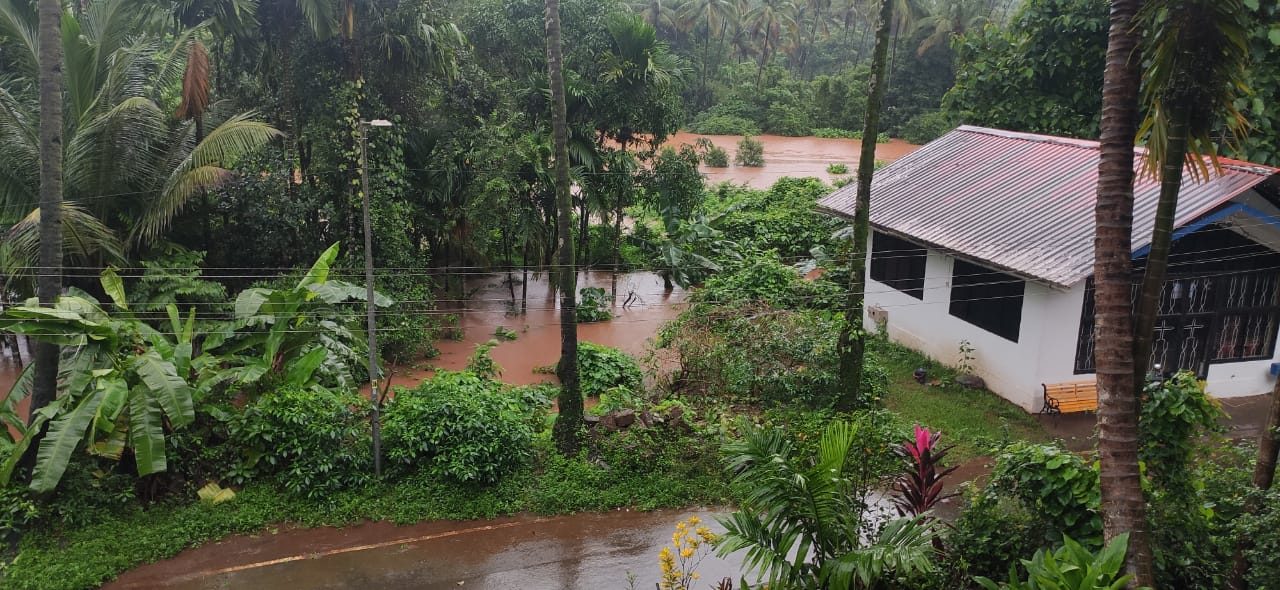
For Mirabag residents, flooding is not a theoretical risk. Every monsoon, parts of the settlement and surrounding fields are inundated when the Zuari swells. Some houses already stand dangerously close to the highest flood levels recorded in recent years.
Locals fear that the bandhara’s structure will obstruct the natural flow of the river, pushing floodwaters further inland.
“Our houses already flood almost every year,” said Asha Naik. “If they build this bandhara and the water level rises even a little more, where are we supposed to go?”
Residents say no flood modelling studies have been shared with them. They want to know how high the water could rise once the river’s flow is restricted by the barrage.
The concern extends downstream as well. Villagers worry that when the bandhara gates are opened during heavy rains, sudden releases could inundate low lying wards such as Dhadem and Madel.
“We are not engineers, but we know what happens when water is suddenly released,” said Sanket Bhandari. “Without proper studies, they are putting entire communities at risk.”
Tidal waters and unknown impacts
Another major concern is the effect on tidal flows. During high tide, seawater travels upstream along the Zuari as far as Sanguem. Residents say the proposed bandhara would block this natural movement of water, potentially altering the river’s behaviour in ways no one has studied.
Farmers worry that changes in tidal flow could affect soil quality and groundwater. Many depend on wells near the river, and any shift in salinity could make the water unusable.
“Our wells are our lifeline,” said Ashwini Naik. “If the river changes and salt water enters, we cannot survive here.”
So far, villagers say, no environmental or hydrological studies have been shared with them that address these concerns.
Questioning the need
The WRD has justified the project by pointing to water shortages at Moissal dam during the summer of 2023. The bandhara, officials say, will help ensure a reliable drinking water supply for nearby areas.
But residents question whether such a large project is necessary for what they see as a relatively small population. They estimate that Panchawadi and Shiroda together have around 20,000 people. Even at 100 litres per person per day, they say, the requirement would be about 2 million litres daily, far less than the proposed diversion.
“This project is far bigger than what is needed for drinking water,” said Sushma Naik. “If it is only for people, why so much water?”
Many villagers believe that industrial and commercial users are the real beneficiaries. They claim that Moissal dam began facing shortages only after water started being diverted for large scale uses.
“Why should our lands be flooded so that industries can get water?” asked Vishumala Naik. “We are the ones who will suffer.”
Lack of transparency
Another major grievance is the lack of information about the project. Residents say the WRD has not provided detailed plans, environmental studies or approvals. They also allege that construction and pipeline work have begun without proper permissions from landowners.
Villagers say officials had promised to hold a public presentation explaining the project but never followed through.
“We asked them to come and explain everything openly,” said Upendra Naik. “Instead, work started quietly. That is why people are suspicious.”
For many residents, the issue is not just the bandhara itself but the way the project has been handled.
“When decisions are taken without consulting the people who live here, it creates fear,” said Sanket Bhandari. “We are not against development, but it should not destroy our villages.”
Environmental concerns
The Zuari River is known for its rich biodiversity, supporting fish, shellfish and dense vegetation along its banks. Residents say the bandhara could disrupt these ecosystems, especially if tidal flows are altered.
Fishermen fear that changes in water movement could affect fish breeding patterns. Farmers worry about the loss of fertile riverbank vegetation.
So far, villagers say, no environmental impact studies have been presented to them.
“This river is full of life,” said Ashwini Naik. “If you block it without studying the impact, the damage may be permanent.”
A growing movement
Opposition to the project has grown steadily in recent months. Meetings have been held in homes and community spaces, with residents sharing information and planning their response.
Many say they are not opposed to development but want proper studies and genuine consultation before any work proceeds.
The proposed project is estimated to cost around Rs 280 crore, a figure that has raised further questions among villagers.
“That is public money,” said Sushma Naik. “It should not be used to destroy people’s homes.”
For now, residents say they will continue to demand answers. Until clear information is provided, they insist, the question remains unanswered.
Who is the bandhara really for?
Residents say they will continue their protests until these demands are addressed and the future of their villages is clearly understood.