New Delhi: The opposition has strongly criticised the central government after the United States announced a temporary 30 day waiver allowing India to purchase Russian oil that is already loaded on ships. The decision has triggered a political debate in India, with several opposition leaders questioning the country’s foreign policy approach and energy independence.
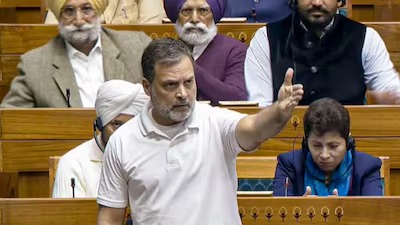
Leader of Opposition in the Lok Sabha Rahul Gandhi criticised the government’s handling of foreign policy, saying India’s international decisions should be guided by its own national interests and democratic values. He argued that the country’s energy security should not depend on approval from another nation.
Gandhi also shared a video of his earlier speech in Parliament where he warned that India could lose control over critical decisions related to energy imports. In that speech, he claimed that the United States was effectively deciding from whom India could purchase oil, raising concerns about the country’s strategic independence.
Congress president Mallikarjun Kharge also criticised the development, saying the language used in the announcement suggested that India required permission to carry out its energy trade. According to him, such wording is normally used in reference to sanctioned states and does not reflect India’s position as a sovereign and responsible global partner.
Kharge further alleged that India’s diplomatic space has been shrinking and claimed the government had conceded ground in key areas such as trade and energy policy. He warned that the country’s strategic autonomy could be affected if such trends continue.
Other leaders from the Congress party also questioned the situation. Party spokesperson Supriya Shrinate asked why a sovereign nation should need approval from another country for its energy purchases, while MP KC Venugopal described the development as humiliating for India’s sovereignty.
The waiver was announced by US authorities as a temporary measure to stabilise global energy supplies during the ongoing tensions in West Asia. The decision allows Indian refiners to process Russian oil that was already loaded onto vessels before recent restrictions came into effect.
The move comes amid growing instability in global energy markets following missile strikes and disruptions to major oil facilities in the Gulf region, along with concerns over shipping through the Strait of Hormuz, a critical route for global oil supply.
Sorry, there was a YouTube error.