Team Goemkarponn
PANAJI: The plan to set up a permanent campus for the Indian Institute of Technology-Goa (IIT-Goa) has hit another hurdle, with conflicting claims emerging over whether the Codar comunidade has given its consent.
Prashant Gaonkar, attorney for the Codar comunidade, maintained that the process is still at a preliminary stage. He explained that the managing committee has not approved the transfer of land, stressing that a written proposal must first be received, reviewed, and then forwarded to the general body for final ratification.
“The committee has only informed the government that land exists. Approval will require a proper proposal, the committee’s consent, and a resolution from the general body,” Gaonkar clarified.
However, sources in the Administration of Comunidades (Central Zone) asserted that the managing committee had already signaled approval. Acting on this, the administrator is said to have proceeded with the next steps, including issuing a public notice for leasing a plot in Survey No. 63/2 for the proposed IIT site.
In August, the State government resolved to earmark about 14.6 lakh square metres of Codar comunidade land in Ponda taluka for the campus and sent the proposal to the Centre.
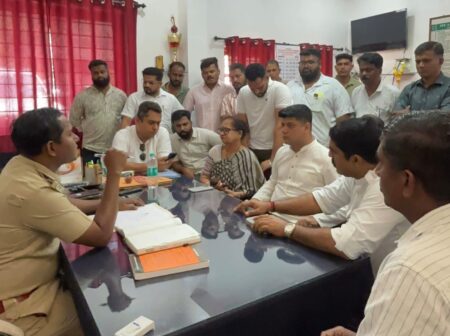
The move has triggered strong opposition in Codar-Bethora. At a public meeting on Monday, residents alleged that the government sidelined them in the decision-making process. They raised objections over the loss of fertile agricultural land, risks to biodiversity and wildlife, and the absence of proper consultations. Environmentalists present at the meeting echoed concerns about irreversible ecological damage.
Villagers warned of intensifying their agitation, announcing a signature campaign and awareness drive to pressure authorities.
This dispute adds to the long list of failed attempts to identify a permanent site for IIT-Goa. Earlier proposals at Loliem (Canacona), Melauli (Sattari), and Cotarli (Sanguem) were scrapped due to public protests, while sites at Rivona (Sanguem) and Dharbandora were abandoned because of land acquisition challenges.