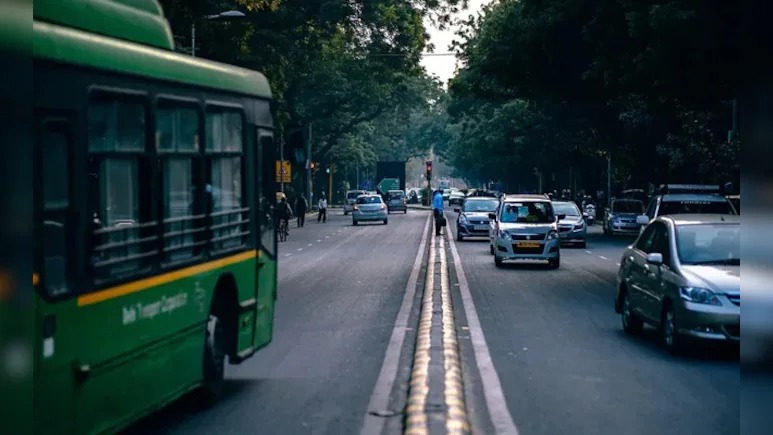
New Delhi: Delhi’s Environment Minister Manjinder Singh Sirsa has urged the Commission for Air Quality Management (CAQM) to roll back its directive to impound End-of-Life (EOL) vehicles and enforce a fuel ban on them, citing serious technological and logistical barriers that make implementation unfeasible at this stage. In a detailed letter to the CAQM chief, Sirsa called the move “premature” and warned that it could prove “counterproductive” if rushed into effect.
In the three-page letter, the minister outlined multiple on-ground operational challenges, with a particular focus on the incomplete readiness of the Automatic Number Plate Recognition (ANPR) systems, which are central to the enforcement of the fuel ban.
Sirsa pointed to several technical shortcomings in the ANPR setup. These include malfunctioning sensors, misplaced cameras, faulty speakers, and software issues reported across numerous fuel stations in the city. Additionally, the lack of integration with the vehicle databases of neighbouring NCR states—such as Haryana and Uttar Pradesh—creates enforcement loopholes, allowing violators to bypass the system. Vehicles without High Security Registration Plates (HSRP) also go undetected, leading to errors in identification.
“These issues demand thorough testing, field-level calibration, and real-time corrections before any attempt at citywide enforcement,” Sirsa wrote, adding that enforcing the ban under current conditions would undermine the very intent of the policy.
The minister further warned that isolated implementation of the fuel ban within Delhi alone would lead to problem displacement rather than resolution. Motorists could easily cross into nearby districts like Gurugram, Faridabad, or Ghaziabad to refuel their vehicles, nullifying the environmental impact of the initiative. Moreover, the absence of similar enforcement mechanisms in surrounding areas may even pave the way for an illegal fuel market, Sirsa noted.
“The success of such a measure depends on regional coordination, not isolated enforcement,” the minister emphasized, underscoring that NCR districts have yet to install ANPR cameras, casting doubts on the readiness for a unified strategy.
To strengthen the case for the rollback, the Delhi government also outlined a set of ongoing and upcoming anti-pollution initiatives, which it believes offer more practical and sustainable solutions. These include:
• A massive plantation drive aiming to plant over 70 lakh trees and shrubs across the capital this year.
• Technological interventions, such as cloud seeding, to artificially induce rainfall and improve air quality.
• A comprehensive revamp of the Pollution Under Control (PUC) certification regime for better enforcement and compliance.
• A new mandate requiring high-rise commercial buildings to install anti-smog guns to reduce dust from construction activities.
Meanwhile, Delhi Chief Minister Rekha Gupta also weighed in on the issue, echoing the concerns raised by the public. Taking to social media platform X, she expressed solidarity with residents and affirmed her government’s commitment to finding practical solutions. “In view of the difficulties being faced by the citizens of Delhi, our government has written to the Commission for Air Quality Management (CAQM), requesting that the decision of not providing fuel to End-of-Life (EOL) vehicles be reconsidered,” she posted.
As pollution continues to be a pressing concern for Delhi, the government’s latest stand signals a shift towards collaborative, region-wide strategies and a technologically sound enforcement framework, rather than hastily implemented bans that may create more complications than solutions.
Sorry, there was a YouTube error.