Team Goemkarponn
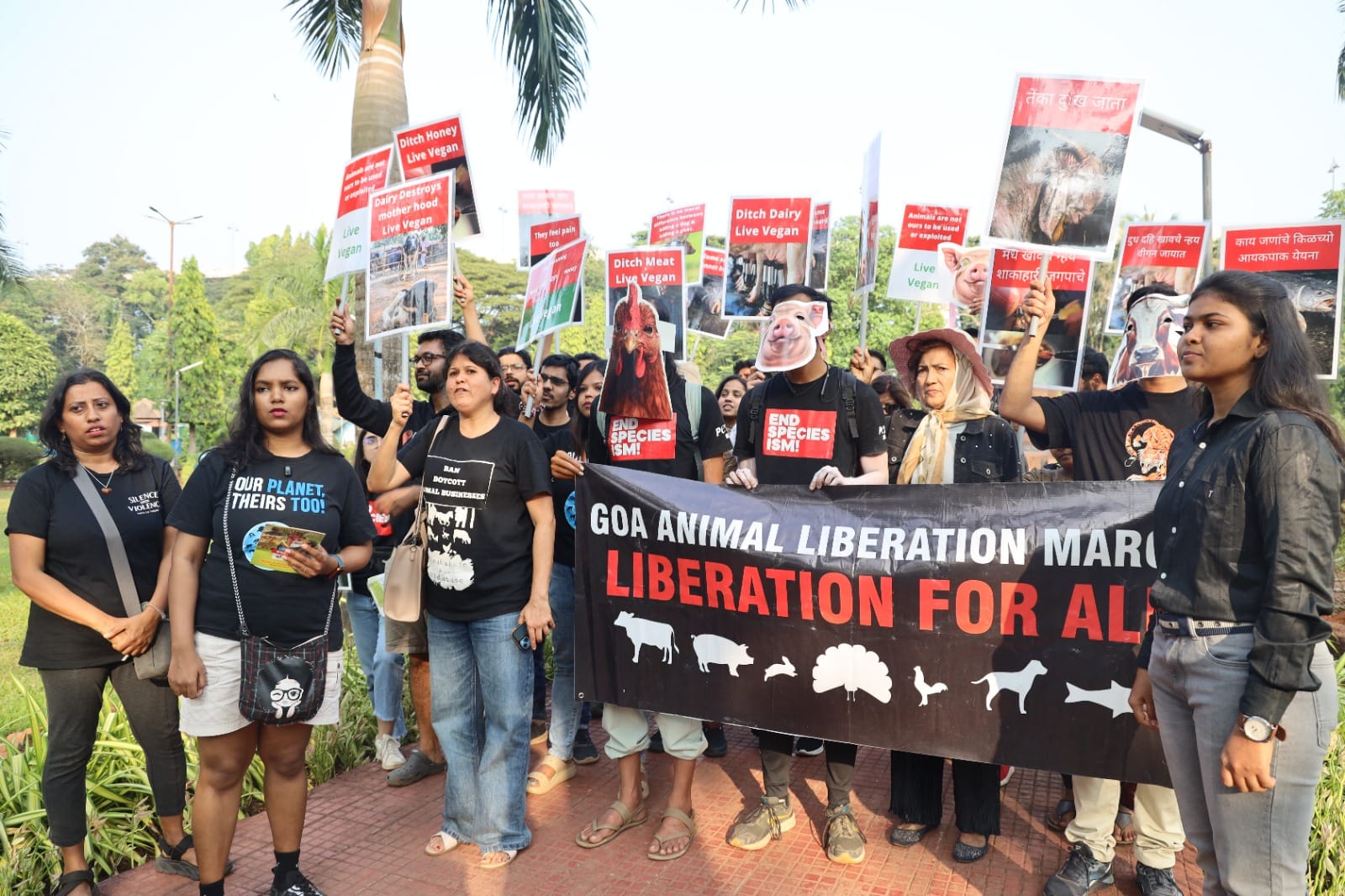
Panaji: The Goa Animal Liberation Movement organised the 4th annual Goa Animal Liberation March on December 27 at Dr Babasaheb Ambedkar Park, Patto, Panaji. The peaceful public demonstration, held from 4 pm to 7 pm, saw participation from animal rights activists from Goa and other regions, advocating animal liberation and ethical justice for non-human animals.
The march began at Dr Babasaheb Ambedkar Park and featured a striking visual demonstration along its route. Activists enacted a reverse role-play, portraying humans as caged and chained while participants dressed as animals stood free. The symbolic act was intended to prompt the public to reflect on the realities of animal confinement and exploitation.
Held shortly after Goa Liberation Day on December 19, the event underscored the idea that liberation is an ongoing process. Organisers said the values that shaped Goa’s freedom—dignity, resistance to exploitation and justice—are equally applicable to animals, who continue to be used as commodities in food systems, research, entertainment, fashion and cultural practices.
The organisers emphasised that veganism is not merely a dietary preference but a social justice movement that challenges the treatment of animals as property. They stated that veganism seeks to end animal use wherever possible and practicable, replacing systems of violence with compassion and accountability.
Organiser Gemini Xettigar said, “I was raised non-vegetarian, but after watching documentaries like Earthlings that revealed the suffering caused by our choices, I went vegan. Being vegan means ensuring, to the greatest extent practically possible, that animals are not exploited or harmed for any purpose. Apart from avoiding meat, eggs, dairy and honey, it also involves rejecting leather, wool, silk, fur, animal circuses, zoos and animal-tested products. Animals want and deserve freedom just like us.”
Fleur Colaço said she began questioning speciesism after opposing other forms of discrimination. “I had already been rejecting injustices like sexism, casteism and transphobia when I realised we must also oppose speciesism—the discrimination that allows exploitation of sentient beings simply because they are non-human.”
Joan Fernandes added, “Animals may not talk or reason like humans, but what matters ethically is their capacity to suffer. That places a responsibility on us to make choices that do not cause them harm.”
The march also highlighted opposition to speciesism, described by activists as the belief that humans are inherently superior to other animals. Rejecting speciesism, they said, is essential to building a society based on empathy, fairness and non-violence.
About Goa Animal Liberation Movement:
The Goa Animal Liberation Movement is part of a global network of Animal Liberation Marches held across cities worldwide, united in demanding justice for animals. The Goa chapter is represented by Gemini Xettigar, Joan Fernandes, Trisha Bene, Daniel Thomas and Fleur Colaço.