Team Goemkarponn
PANAJI: The Goa Legislative Assembly on Monday passed the State Budget for 2026–27 amid noisy scenes and strong protests from opposition members, who demanded discussion on a Private Members’ resolution. The budget was cleared even as the Model Code of Conduct (MCC) remains in force in South Goa following the announcement of the Ponda Assembly by-election.
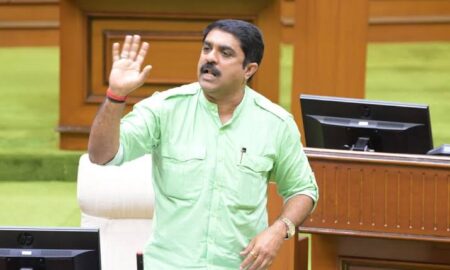
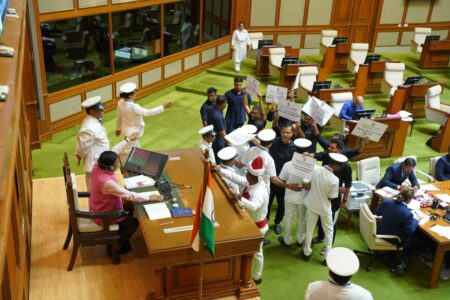
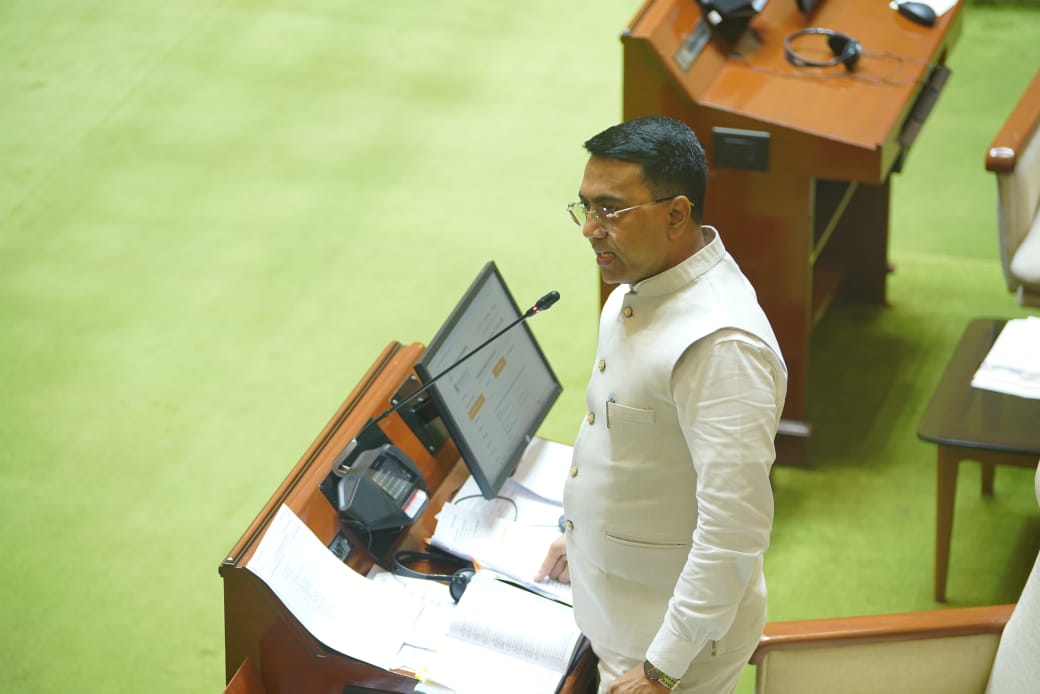
Chief Minister Pramod Sawant opted to push through the full State Budget instead of presenting a Vote on Account, a move that triggered sharp objections from the opposition benches. As the House proceedings continued, opposition MLAs trooped into the well raising slogans and creating a commotion while demanding that their resolution be taken up for discussion.
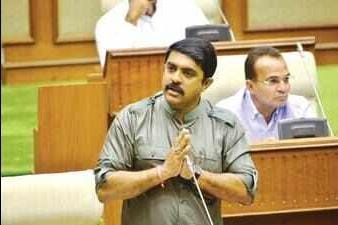
Despite repeated appeals, the protesting legislators continued their agitation and were eventually removed from the well of the House. Several opposition members later walked out, while Goa Forward Party MLA Vijai Sardesai remained present during the proceedings.
Defending the decision to pass the full budget, Chief Minister Sawant said that the government had to take into account the Model Code of Conduct that has come into force in the Ponda constituency ahead of the by-poll. He explained that while discussing Budget demands, ministers are required to give assurances on various matters, which could potentially violate the MCC.
“During the passage of the Budget, ministers normally give assurances while responding to demands. However, under the Model Code of Conduct such assurances cannot be made as they could amount to a violation. These assurances will be addressed in the next session,” Sawant said.
The Chief Minister also stated that the government had decided to curtail the ongoing Budget Session and hold a Monsoon Session later in the year. With the Ponda by-election scheduled and municipal elections expected in the coming months, the government chose to pass the entire State Budget in the current session rather than opting for a temporary Vote on Account.
The decision led to a sharp reaction from the opposition, which accused the government of rushing through key financial business without adequate debate. However, the treasury benches defended the move, stating that the administration must ensure continuity of governance and financial operations.