Team Goemkarponn
PANAJI: Goa may officially be considered a “safe” State in terms of groundwater use, but the Central government has warned that underlying geological and structural challenges could threaten the State’s long-term water security if not addressed.
The Central Ground Water Board’s (CGWB) 2025 report, National Compilation of Dynamic Ground Water Resources of India, estimates Goa’s total annual groundwater recharge at 0.38 billion cubic metres (bcm), with extractable resources of 0.31 bcm. Annual groundwater extraction is currently around 0.07 bcm, putting the Stage of Ground Water Extraction at 23.3 per cent, well within sustainable limits.
Compared to 2024, the report notes that recharge and extractable resources have remained stable, with only a slight rise in extraction, increasing the extraction stage from 22.91 per cent to 23.3 per cent. All 12 groundwater assessment units in Goa, corresponding to its talukas, are classified as “Safe,” covering the entire 2,209.59 sq km recharge-worthy area of the State.
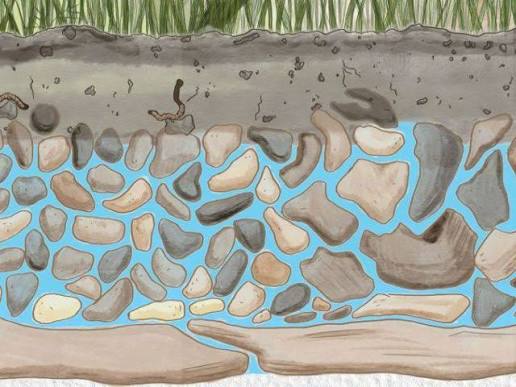
However, the Ministry of Jal Shakti cautioned that these figures do not fully reflect the complexities of groundwater management in Goa’s small, coastal, and land-constrained environment. In a written reply to Rajya Sabha MP Sadanand Shet Tanavade, Minister of State for Jal Shakti V Somanna highlighted that Goa’s terrain, underlain by hard rock aquifers such as granite, granitic gneiss, meta-volcanics, meta-sediments, and laterites, has limited groundwater storage and highly variable yields, making water availability uneven and site-specific.
Somanna also pointed out that despite heavy monsoon rainfall, steep slopes and undulating terrain result in rapid surface runoff into rivers and the sea, reducing groundwater recharge and base flow during non-monsoon months.
Under the Jal Jeevan Mission, Goa has been advised to enhance groundwater sustainability through dedicated borewell recharge structures, rainwater harvesting, rejuvenation of existing water bodies, and greywater reuse.