Team Goemkarponn
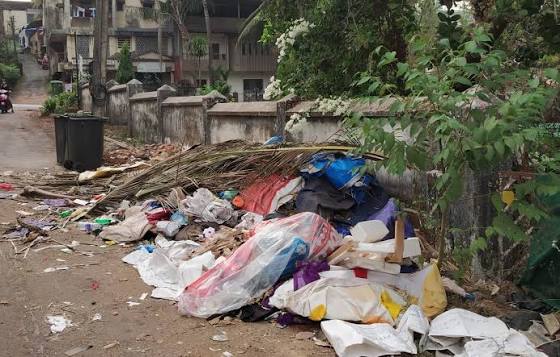
Porvorim: The Goa government has launched a strategy to identify and eliminate “black spots” — areas prone to illegal garbage dumping — across the state, while preparing to implement stricter waste management rules from April.
In a written reply in the Goa Legislative Assembly, Waste Management Minister Atanasio Monserrate said the government has currently identified 13 vulnerable dumping locations across the state, including four in North Goa and nine in South Goa.
While local bodies are responsible for door-to-door waste collection and preventing littering under the Solid Waste Management Rules, 2016, the Goa Waste Management Corporation (GWMC) has taken up the task of clearing waste along National Highways and Major District Roads.
Officials said cleaning operations at these high-risk dumping sites have been intensified and are now being carried out on an alternate-day basis to prevent the accumulation of garbage.
To curb illegal dumping, the state has also strengthened enforcement measures. Individuals and establishments caught dumping waste illegally can be fined ₹2,500 under the Goa Non-Biodegradable Garbage (Control) Act, 1996.
Joint enforcement drives are being conducted by the Goa Waste Management Corporation in coordination with the Goa State Pollution Control Board and the Goa Police.
The Goa State Pollution Control Board is also enforcing the ban on single-use plastic through market inspections and raids, with directions issued to local police and panchayat authorities to ensure compliance.
Meanwhile, the Directorate of Municipal Administration has announced that the New Solid Waste Management Rules, 2026 will come into force from April 1. The revised rules are expected to introduce stricter waste management provisions that will be incorporated into municipal and panchayat bye-laws.
Officials said the government is also exploring technology-driven solutions to tackle illegal dumping, including AI-enabled cameras, geo-tagging and drone surveillance.
While measures such as fencing and warning signs at vulnerable locations will continue to be handled by local bodies, authorities believe that advanced monitoring technologies could significantly strengthen enforcement efforts in the future.