Team Goemkarponn
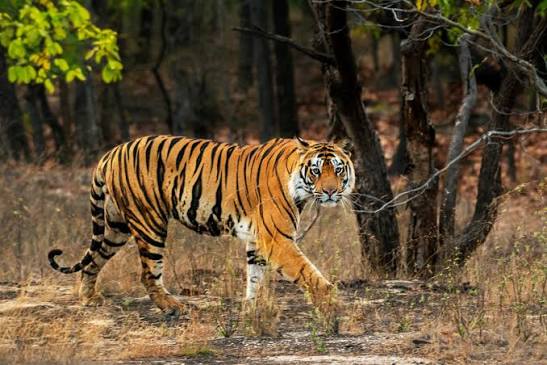
PANAJI: Goa is set to begin its three-month wildlife census in March as part of the 2026 All India Tiger Estimation (AITE), officials confirmed. Preparatory training for the state’s forest staff has already been completed by experts from the Wildlife Institute of India (WII) and the National Tiger Conservation Authority (NTCA), which oversees the national survey.
The census will follow a three-phase approach, integrating ground surveys, satellite data, and AI-assisted camera trapping. Phase I, scheduled for March, will focus on recording indirect signs of tiger presence such as pugmarks, claw marks, scat, prey remains, as well as vegetation density and human activity in forest areas.
Phase II will leverage satellite imagery and remote sensing to examine forest cover, terrain, water sources, and potential human encroachments, helping to identify critical habitats and wildlife corridors.
In Phase III, WII will deploy camera traps at key locations—including trails, ridgelines, and water points—identified during earlier surveys. Each camera will operate for approximately 25 days, and captured images will be processed using AI software to identify individual tigers based on their unique stripe patterns.
The AITE, first launched in 2006, has completed five cycles—in 2006, 2010, 2014, 2018, and 2022—with Goa participating each time. The last survey in 2022 recorded five tigers in the state.