Team Goemkarponn
Panaji: The Goa government is preparing to mount a formal challenge before the Supreme Court against the Central Empowered Committee’s (CEC) recommendation to declare a large portion of the State’s forested landscape as a tiger reserve, senior officials have confirmed.
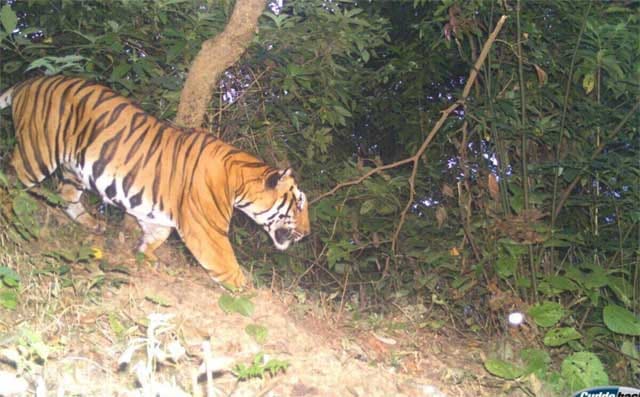
The proposed plan envisages notification of a Goa Tiger Reserve spanning nearly 469 sq km in the initial stage, covering the Netravali and Cotigao wildlife sanctuaries along with select areas of the Bhagwan Mahaveer Wildlife Sanctuary and National Park. However, the State contends that the CEC’s assessment overlooks ground realities and raises serious legal and administrative concerns.
A senior officer in the State secretariat said the government will place detailed objections on record, particularly highlighting the implications for residents living inside and around the identified forest tracts. “There are practical difficulties faced by local communities that have not been adequately addressed. In addition, there is ambiguity regarding the protection regime, as a tiger reserve does not enjoy the same legal status as a national park,” the official said.
The government is also expected to flag the regulatory consequences of the proposal, pointing out that tiger reserves fall under the direct supervision of the Centre and the National Tiger Conservation Authority (NTCA). This, officials say, would result in stricter enforcement and heavier penalties for violations, significantly altering the lives of forest-dependent communities.
The CEC report identifies 102 households within the areas earmarked for the first phase of the reserve. These include 50 families in Netravali Wildlife Sanctuary, 41 in Cotigao, nine in the northern sector of Bhagwan Mahaveer Wildlife Sanctuary, and two households located inside Bhagwan Mahaveer National Park. The panel has argued that these forest patches share an unbroken ecological corridor with Karnataka’s Kali Tiger Reserve, making them suitable for immediate inclusion.
At the previous hearing held on December 15, 2025, the Supreme Court granted the Goa government and the Goa Foundation a two-week window to submit their responses. While the Goa Foundation has already made its position known, the State’s reply is still awaited. “The affidavit is in its final stages and awaiting formal clearance,” the official said.
The CEC has recommended dividing the proposed reserve into a core zone of 296.70 sq km and a buffer zone of 171.90 sq km. It has also stated that once the apex court issues its final directions, the State would be required to formally notify the tiger reserve within three months.
In its rationale, the central panel has emphasised the ecological benefits of linking Goa’s forests with the Kali Tiger Reserve. According to the report, such integration would facilitate free movement of tigers, maintain genetic diversity, and reinforce tiger populations across the Sahyadri landscape, contributing to long-term ecological stability in the Kali–Mhadei–Goa region.
Notably, forest regions with denser human settlements have been excluded from the first phase. The Mhadei Wildlife Sanctuary, which has over 600 households, and the southern stretch of Bhagwan Mahaveer Wildlife Sanctuary, home to around 560 families, have been proposed for a later stage. The CEC has acknowledged that bringing these areas under a tiger reserve framework would require prolonged dialogue, community engagement, and trust-building efforts.