By Kajal
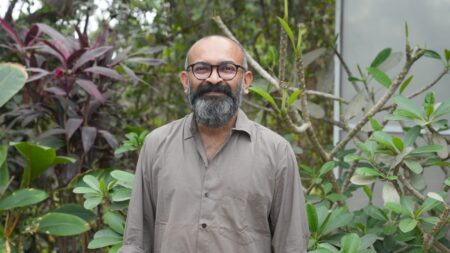
In the quiet village of Sasoli in Bicholim, a simple yet powerful green idea is taking root. Lekhni Naik is introducing Goans to the Japanese art of kokedama, blending global technique with local wisdom and materials.
Kokedama, a traditional Japanese gardening method, literally translates to “moss ball”. It involves shaping soil into a ball, embedding a plant within it, and wrapping it with moss or fibre instead of placing it in a plastic pot. The result is both aesthetic and sustainable.
“For many people, this is a completely new concept,” Lekhni says. “But when I explain it, they realise it’s very simple and can be done at home with what we already have.”
Her approach is rooted in accessibility. Instead of relying on imported moss, she uses coconut fibre, a material widely available in Goa. “We don’t always get sphagnum moss here,” she explains. “So I use coconut husk fibre. It works beautifully and is completely local.”
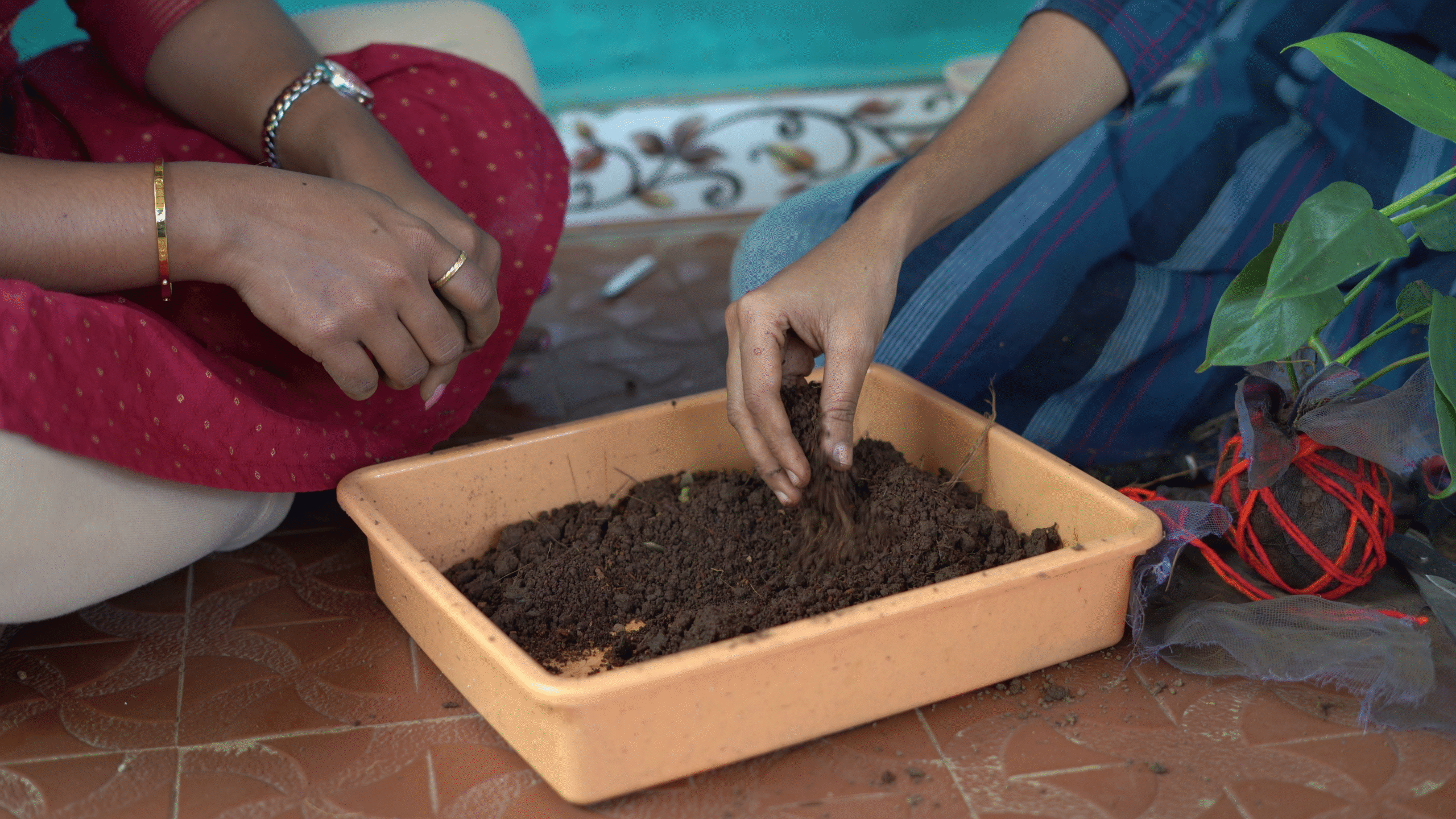
The process, she says, is as important as the result. Soil is mixed with coco peat and shaped into a firm ball, with just enough moisture to hold it together. The plant roots are carefully cleaned and placed inside, ensuring they are not damaged. The ball is then wrapped and tied, often with simple thread.
“You have to feel the soil,” Lekhni says. “If it’s too wet, it won’t hold shape. If it’s too dry, it will crumble. There’s a balance, and once you understand it, the process becomes very intuitive.”
Her workshops, both online and offline, have drawn participants from across Goa, including students, homemakers, and gardening enthusiasts. Many come in with curiosity and leave with a deeper appreciation for sustainable practices.
“People often ask me what kind of soil to use,” she says. “I tell them, don’t overthink it. Use what you have, but prepare it well. Mix soil with coco peat, let it settle overnight, and then work with it.”
Beyond technique, Lekhni’s work carries a strong environmental message. She is particularly vocal about reducing plastic use in gardening.
“Plastic planters are everywhere,” she says. “We don’t realise that over time, they break down and release microplastics into the soil. That affects soil fertility and the health of our plants.”
Kokedama, she explains, offers a simple alternative. By eliminating plastic pots, even for small plants, gardeners can make a meaningful difference.
“It may look like a small step,” she says, “but if many people start doing it, the impact is huge.”
Her own garden stands as proof. What began as a modest kitchen garden has grown into a lush collection of indoor plants, each carefully nurtured using kokedama techniques. Hanging plants, tabletop arrangements, and even experimental designs fill her space, creating what she describes as “a living, breathing ecosystem”.
Maintenance, she insists, is not complicated. “Indoor plants don’t need daily watering,” she says. “Once every two days is enough in most cases. You can either dip the kokedama ball in water or gently sprinkle it.”
Plant choice, however, matters. “Money plants grow quickly and adapt well,” she explains. “Snake plants and some succulents take more time. You have to understand each plant’s nature.”
Her journey has also become a platform for empowerment, especially for women. Through her workshops, she encourages others to turn this skill into a source of income or personal expression.
“I tell women, this is something you can do from home,” she says. “You don’t need big investments. You just need interest and patience.”
There is also a deeper cultural connection in her work. She draws parallels between traditional skills and modern sustainability.
“We already have skills like stitching, weaving, and working with natural materials,” she says. “If we use those same skills creatively, we can protect nature as well.”
For Lekhni, kokedama is not just an art form. It is a way of thinking, one that values simplicity, resourcefulness, and a closer relationship with nature.
“People think they need big spaces or expensive tools to start gardening,” she says. “But it can begin with one plant, one small effort.”
In Sasoli, that effort has already begun to ripple outward. Through her work, Lekhni Naik is not just growing plants. She is growing awareness, one kokedama at a time.