Team Goemkarponn
PANAJI: The High Court of Bombay at Goa has emphasized the need for strict accountability in tree felling linked to infrastructure works, proposing the creation of a high-level committee of legal officers and environmental experts to monitor translocation and compensatory plantation.
The Division Bench of Justice Bharati Dangre and Justice Ashish S. Chavan made the observations while hearing a PIL filed by Aaron Victor E. Fernandes and two others. The judges noted that although agencies such as the Ministry of Road Transport and Highways (MoRTH) and the Goa State Infrastructure Development Corporation (GSIDC) permit tree cutting for highway and road projects, the real issue lies in whether heritage trees are being re-planted effectively, whether suitable species are chosen, and who ensures their long-term survival.
The court suggested a panel comprising Advocate General Devidas Pangam, Assistant Solicitor General of India Somnath Karpe, senior advocate Norma Alvares and other members. Alvares recommended that the committee also include representatives from the PWD, GSIDC, Planning and Forest Departments, along with independent experts, to draw up a comprehensive programme. She cautioned that tree transplantation and plantation should not become a mere contractual formality involving payments, but a sustained effort to maintain Goa’s green cover.
“The survival of transplanted or freshly planted trees is not monitored. Cutting and replantation must go beyond beautification drives or landscaping promises,” the Bench observed.
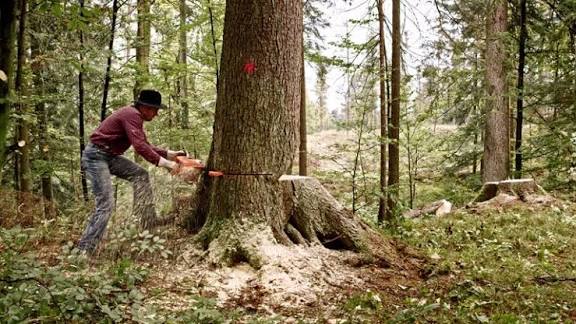
The issue comes amid ongoing protests over large-scale felling of old trees in the State. Earlier this week, the Goa Green Brigade staged a demonstration against the Public Works Department’s (PWD) decision to cut 27 heritage trees along the Mapusa–Parra road, terming it a “mass murder of trees.” Bowing to public pressure, the PWD agreed to halt further felling and remove tar around the trunks of existing trees, in compliance with National Green Tribunal norms.
MoRTH, in an affidavit, maintained that plantation responsibilities lie with the State government. However, the Bench recalled earlier lapses, including the Guirim–Porvorim elevated flyover project, where 612 trees were permitted to be cut and four transplanted. Nearly ₹1 crore was deposited by the State for felling and replantation, despite guidelines requiring contractors to bear such costs. The judges expressed concern that the Tree Authority routinely grants clearances without detailed compensatory plantation plans or mandatory studies.
The petitioners argued that permissions for cutting continue to be issued mechanically, with little consideration for the ecological consequences.