New Delhi: Oxfam International has cited India’s political reservation system as a notable example of empowering ordinary citizens, particularly economically disadvantaged and socially excluded groups, to participate meaningfully in governance. The observation came in Oxfam’s annual inequality report, released on the opening day of the World Economic Forum in Davos.
The report, titled Resisting the Rule of the Rich: Protecting Freedom from Billionaire Power, warned that billionaires are increasingly dominating political spaces globally, being 4,000 times more likely than ordinary citizens to hold office. In contrast, systems like India’s reservations provide avenues for underrepresented communities to gain legislative representation and influence policy.
Oxfam said political, institutional, and social conditions can strengthen the capacity of ordinary people to affect decision-making, even in societies with structural inequalities. Effective governance, inclusive institutions, political incentives for responsiveness, and collective organization are key to enabling participation, the report noted. Civil society organizations, grassroots movements, and trade unions are highlighted as important allies in expanding political engagement.
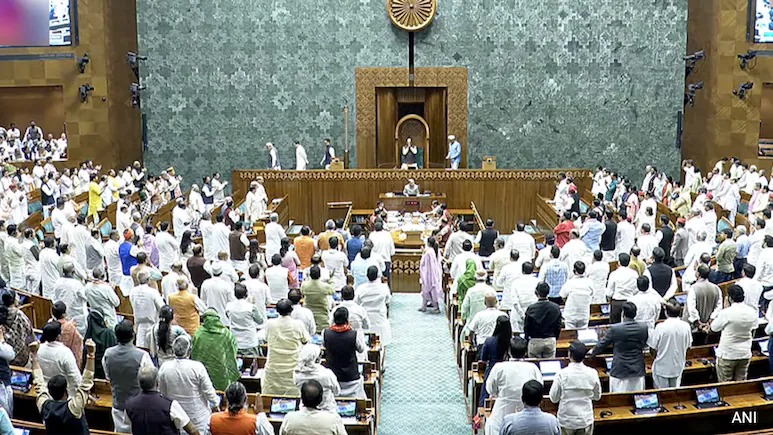
India’s system of reservations offers quotas for Scheduled Castes (SCs), Scheduled Tribes (STs), and other marginalized groups in legislatures, proportional to their population. Recent reforms have also introduced a 33 percent reservation for women. Beyond politics, reservations exist in education and government employment for weaker and underrepresented groups, further enhancing opportunities for social and economic mobility.
The report emphasized that such measures allow marginalized communities not only to access positions of power but also to advocate for redistributive policies that can reduce inequality. Oxfam described India’s approach as a “compelling example” of how structural reforms can give ordinary citizens a meaningful voice in political and economic decision-making.
By highlighting India’s quota system, Oxfam underscored the broader global need to create inclusive political mechanisms that empower ordinary people and curb the disproportionate influence of wealthy elites.