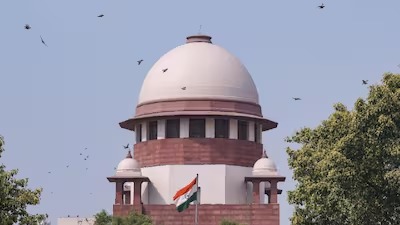
New Delhi: In a scathing observation, the Supreme Court of India has sounded a dire warning over the worsening environmental crisis in Himachal Pradesh, cautioning that if immediate corrective measures are not taken, the state may one day “vanish from the country’s map.” The bench, comprising Justices J.B. Pardiwala and R. Mahadevan, made the remarks on July 28 while hearing a plea challenging a Himachal Pradesh High Court order. The plea opposed the state government’s June 2025 notification declaring certain regions as “green areas” to curb construction. While refusing to interfere with the High Court’s decision, the apex court used the opportunity to issue a strong advisory to both the state and central governments.
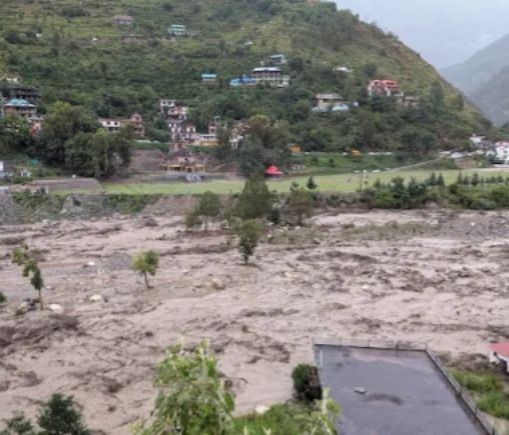
The court emphasized that climate change is having a “visible and alarming impact” on Himachal Pradesh, but human activities—not nature—are to blame. “If things proceed the way they are, the day is not far when the entire state of Himachal Pradesh may vanish in thin air from the map of the country. God forbid this doesn’t happen,” the bench remarked. It held unchecked infrastructure development, such as hydropower projects, four-lane highways, tunnel construction, and multi-storey buildings, responsible for increasing the state’s vulnerability to natural disasters like landslides, land subsidence, and flash floods.
The bench criticized the revenue-first approach, warning that development at the cost of the environment is unsustainable. “Earning revenue is not everything. It cannot come at the cost of environment and ecology,” the judges stated. Himachal Pradesh, with over 66% forest cover and immense natural beauty, has witnessed large-scale deforestation, forest fires, and habitat degradation, all intensified by unregulated tourism and urban expansion. The court also noted rising temperatures, irregular snowfall patterns, and frequent extreme weather events as proof that climate change is already altering the region’s natural balance.
Stressing that development projects must be informed by scientific and local expertise, the court urged authorities to seek input from geologists, environmental scientists, and local communities before undertaking construction in ecologically sensitive zones. The uncontrolled surge in tourism infrastructure, the court warned, is severely straining the region’s natural resources and putting both the environment and livelihoods—particularly in farming and eco-tourism—at risk.
Recognizing the broader Himalayan vulnerability, the court called for coordinated action among all hill states to ensure development strategies are aligned with environmental preservation. It also held the Union Government accountable, stating that it bears constitutional responsibility to prevent further ecological degradation in Himachal Pradesh.
To ensure the matter receives urgent attention, the bench directed the Supreme Court registry to register a suo motu public interest litigation (PIL) and asked the Himachal Pradesh government to file a detailed reply outlining its action plan for sustainable development and climate resilience. The court remarked, “Much damage has already been done, but something is better than nothing,” and scheduled the matter for hearing on August 25, pending approval from the Chief Justice of India.
Sorry, there was a YouTube error.