New Delhi:
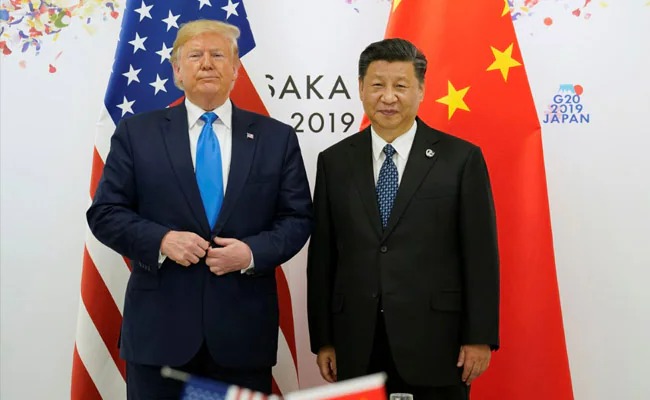
As the global stage braces for a potential trade war between the US and China, India’s manufacturing sector is feeling the pinch. China’s recent imposition of export restrictions on critical raw materials and components has sent ripples through India’s ‘Make in India’ program, exposing the country’s deep dependence on Chinese supplies.
China’s preemptive measures, including bans on the export of gallium, germanium, antimony, and lithium extraction, are crucial for sectors such as solar cell production, semiconductor manufacturing, and electric vehicle (EV) battery production. These restrictions are not just aimed at the US but also impact any country using these components to manufacture products destined for the US market.
China’s export curbs have created a crisis for Indian firms in the electronics, solar, and EV sectors. These industries, which have seen significant growth under the ‘Make in India’ initiative, are now facing major delays and disruptions. The ban on gallium and germanium in December 2024, followed by the restriction on antimony and the addition of lithium extraction to the controlled export list, has severely hampered production.
India’s reliance on Chinese machinery, intermediate goods, and components is stark. The country’s imports from China increased to $101.73 billion in 2023-24, highlighting this dependence. The US, in its efforts to reduce its reliance on China, has been increasingly looking to India as an alternative manufacturing hub, but China’s latest moves have indirectly hurt India’s ambitions.
The current situation is exacerbated by the existing tensions between India and China. Past border clashes, such as the Galwan Valley incident in 2020, and India’s subsequent restrictions on Chinese investments and visas have strained bilateral relations. China’s export restrictions are partly seen as a response to these measures, signaling deeper geopolitical tensions and a looming trade war.
Economic think-tank GTRI has noted that China’s moves are double-edged, potentially hurting both China and India in the long run. As India continues to navigate these challenges, the ‘Make in India’ program faces significant disruptions, undermining its goal of transforming India into a formidable manufacturing hub.
India’s efforts to diversify its supply chains and reduce dependence on Chinese components are critical. The government’s Production Linked Incentive (PLI) schemes, aimed at encouraging domestic manufacturing and attracting foreign investment, need to be bolstered. However, structural challenges such as complex regulatory environments, inadequate infrastructure, and skill shortages must also be addressed to ensure the long-term viability of India’s manufacturing sector.
Sorry, there was a YouTube error.