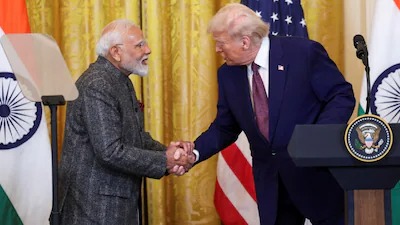
New Delhi: India and the United States have reached a significant trade agreement after months of negotiations, marking an important turning point in economic relations between the two nations. Following a telephone conversation between Prime Minister Narendra Modi and US President Donald Trump, Washington announced an immediate reduction of tariffs on Indian goods from 25 percent to 18 percent. The decision is expected to provide a major boost to Indian exporters and improve market access across several key sectors.
The new arrangement is being viewed as one of the most meaningful trade developments in recent years. Although the full framework of the agreement has not yet been formally released, the tariff reduction itself represents a substantial gain for India. The United States remains India’s single largest trading partner, and lower duties are likely to enhance competitiveness for products such as textiles, apparel, seafood, chemicals and automobile components.
Indian exporters are expected to benefit directly from the easier entry into the American market. The textile industry, which sends nearly a third of its overseas shipments to the United States, could regain pricing strength. Seafood producers, particularly shrimp exporters, are also likely to see stronger demand. The automobile and auto ancillary sector stands to gain from reduced costs, helping India strengthen its role in global supply chains. Chemical and consumer goods manufacturers may also find new opportunities as barriers come down.
In return, India is expected to lower its own tariffs on a range of American products, including energy, technology and agricultural goods. Discussions have indicated a significant expansion in purchases of US energy supplies, which could reshape bilateral trade flows in the coming years. Markets reacted positively to the announcement, with Indian equity indices recording sharp gains amid renewed investor optimism.
The agreement is being portrayed as the result of strong personal engagement between the two leaders. Both sides have described the understanding as a step toward deeper strategic cooperation beyond trade alone. Support from various ministries and industry groups has followed, highlighting the potential for job creation, innovation and industrial collaboration.
While some political voices have questioned certain aspects of the deal, the overall response has remained largely optimistic. The breakthrough signals a fresh momentum in India and US relations and sets the stage for broader economic partnership in the years ahead.
Sorry, there was a YouTube error.