New Delhi: In a forceful diplomatic rebuttal, India has categorically rejected the latest ruling by a so-called “Court of Arbitration” on the Indus Waters Treaty, calling the panel “illegal, void, and in brazen violation” of the treaty itself. The Ministry of External Affairs (MEA) issued a detailed five-point statement denouncing the panel’s recent “supplemental award” concerning the Kishenganga and Ratle hydroelectric projects in Jammu and Kashmir.
Calling the self-styled arbitration body “unlawfully constituted,” the MEA stated unequivocally that India has never recognized its legitimacy. “This purported Court of Arbitration has no standing in international law and no jurisdiction to rule on India’s sovereign actions,” the statement read. “Any decisions or awards issued by this forum are therefore illegal and null and void.”
The MEA emphasized that India’s position has been consistent: the constitution of this panel was itself a serious breach of the Indus Waters Treaty of 1960, and therefore any subsequent proceedings or rulings are without legal basis.
India also used the occasion to reaffirm its position that the Indus Waters Treaty has been put in abeyance following the recent Pahalgam terror attack, which was traced to Pakistan-based groups. The government asserted that until Pakistan “credibly and irrevocably” ends its support for cross-border terrorism, India will not be obligated to perform any of its responsibilities under the treaty.
“In exercise of its sovereign rights under international law, India has placed the Indus Waters Treaty in abeyance. The treaty obligations will remain suspended until Pakistan dismantles all terror infrastructure and financing and ensures no terrorist operates from its soil,” the MEA said.
India also strongly criticized Pakistan for allegedly manipulating international platforms to distract from its own role in global terrorism. Calling Pakistan the “global epicenter of terrorism,” the MEA said the creation of this so-called arbitral tribunal is just another instance of Pakistan’s “decades-long pattern of deception and misuse of global forums.”
“This latest charade is a desperate attempt by Pakistan to deflect attention from its complicity in terrorism. India does not and will not recognize any ruling or body that seeks to legitimize this farce,” the MEA said.
India reiterated that any future terrorist attack on Indian soil with links to Pakistan will be treated as a serious escalation, warranting a strong response, including potential military action anywhere inside Pakistan.
Prime Minister Narendra Modi’s well-known declaration that “blood and water cannot flow together” was again cited as the guiding principle behind India’s response. The government has also consistently maintained that “terror and talks cannot go hand in hand,” sending a clear message to Islamabad and Rawalpindi that dialogue or treaty compliance is impossible without credible action against terror groups.
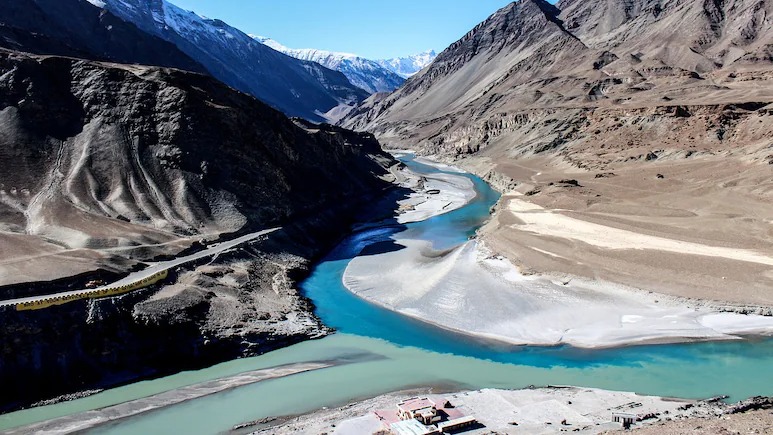
The Indus Waters Treaty, brokered by the World Bank in 1960, governs the distribution of water from the Indus River system between India and Pakistan. Under its terms:
• India received control over the eastern rivers: Beas, Sutlej, and Ravi.
• Pakistan was granted access to the western rivers: Indus, Jhelum, and Chenab.
The agreement also includes mechanisms for dispute resolution and allows limited use by each side of the rivers allocated to the other. Over the decades, the treaty had withstood wars and hostilities between the two neighbours—until now.
India’s latest statement leaves no room for ambiguity: the so-called arbitration panel is illegitimate, its findings meaningless, and the Indus Waters Treaty itself is suspended until Pakistan eliminates terrorism in both word and deed.
With this stance, India has sent a strong diplomatic and strategic signal—not just to Pakistan, but also to the international community—that national security will override any legacy agreements when confronted with state-sponsored terrorism.
Sorry, there was a YouTube error.